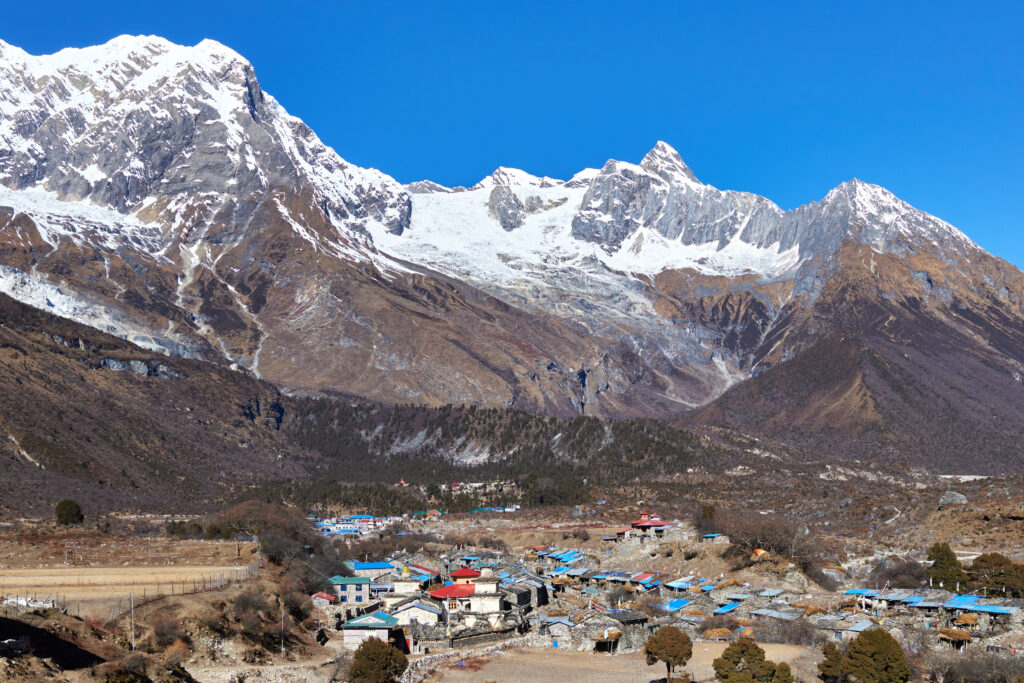

Welcome to the ultimate, definitive guide to the Manaslu Circuit and the formidable Larkya La Pass trek. If you are reading this, you are likely looking for an adventure that transcends the ordinary. You want to bypass the overcrowded, highly commercialized teahouses of the Annapurna Circuit and the Everest Base Camp trail. You are seeking something rawer, more authentic, and infinitely more rewarding. You are looking for the “Mountain of the Spirit.
Standing at a staggering 8,163 meters, Mount Manaslu is the eighth-highest peak on the planet. For decades, the trekking circuit that circumnavigates this colossal massif remained a closely guarded secret among elite mountaineers and adventurous backpackers. The region was completely off-limits to outside visitors until 1991, allowing its ancient Tibetan Buddhist culture to remain locked in a pristine time capsule. Today, as we move through the trekking seasons of 2026, 2027, and 2028, the Manaslu Circuit represents the absolute pinnacle of Himalayan trekking. It offers an unparalleled synthesis of deep cultural immersion, wild topographical variation, and rigorous physical demands.
This exhaustive, 2500+ word expert blog post will break down absolutely everything you need to know to successfully plan and execute this 177-kilometer journey. From the groundbreaking 2026 permit regulation changes to the hidden side trips you cannot afford to miss, to the granular costs of a plate of Dal Bhat at 4,000 meters—we have you covered.
Why Choose the Manaslu -Larkya La pass Trek for 2026-2028?
The Himalayan trekking landscape is evolving rapidly. Infrastructural developments, changing weather patterns, and shifting tourist demographics are altering the classic routes. The Annapurna Circuit, while still breathtaking, has seen extensive road construction that has eaten away at the traditional walking trails. Everest Base Camp remains an iconic bucket-list achievement, but the sheer volume of foot traffic can sometimes dilute the sense of wilderness isolation.
The Manaslu Circuit strikes the perfect, delicate equilibrium. It is wild enough to feel like a true expedition, yet developed enough to support a full teahouse trekking infrastructure, completely eliminating the need for heavy, expensive camping gear. Over the course of 14 to 18 days, you will start in the sweltering, sub-tropical river valleys carved by the Budhi Gandaki River, ascend through dense, temperate rhododendron forests, and finally emerge into a stark, hypoxic alpine desert. The climax of this journey is the brutal, awe-inspiring traverse of the Larkya La Pass at 5,160 meters.
If you want to experience the Himalayas exactly as they were meant to be experienced—challenging, spiritual, and unfathomably beautiful—Manaslu is your destination.
The 2026 Permit Revolution: Rules, Ratios, and Solo Travel Explained
Trekking in the Manaslu region is strictly governed by the Government of Nepal. Because the trail closely borders the sensitive Tibet Autonomous Region of China, it is designated as a Restricted Trekking Area. In March 2026, the Department of Immigration (DoI) instituted a landmark policy shift that completely overhauled how trekkers access this region. If you are reading outdated blogs from 2023 or 2024, you need to throw that information away. Here is the current legal reality for 2026 and beyond.
The End of the Mandatory Two-Trekker Rule
Historically, independent travelers faced a massive bureaucratic hurdle: the Nepalese government strictly mandated a minimum group size of two foreign trekkers to issue a Restricted Area Permit (RAP). Solo backpackers were forced to artificially pair up with strangers on internet forums just to satisfy the paperwork.
The March 2026 DoI ruling legally and permanently abolished this requirement. Individual, solo foreign trekkers can now apply for and obtain restricted area permits entirely on their own merit.
The Catch: Solo Permits Do Not Mean Independent Trekking
While you can now get a permit as a solo traveler, you are still legally prohibited from trekking alone. The mandate to hire a government-licensed trekking guide remains strictly and rigidly in force across the region. Furthermore, all trekkers—whether solo or in a group of ten—must organize their permits and expedition through a registered trekking agency affiliated with the Trekking Agencies’ Association of Nepal (TAAN). The term “solo” now applies to permit eligibility, not the freedom to wander the high Himalayas unguided.
Guide-to-Trekker Ratios and Digital Modernization
To combat the dangerous dilution of safety oversight seen in mass-group trekking, the 2026 update also introduced a strict guide-to-trekker ratio. A single licensed guide is now legally permitted to lead a maximum of seven trekkers. If your group expands to eight people, a second licensed guide must be hired.
Additionally, the permit system has finally entered the digital age. Your agency can now initiate the permit application process using your “Application Submission ID” before you even arrive in Nepal, removing the old bottleneck of waiting for an active visa number in Kathmandu.
The Cultural Heartbeat: Nubri Heritage and Tibetan Buddhism
The physical challenge of Manaslu is matched only by the depth of its cultural immersion. As you hike higher up the Budhi Gandaki gorge, the terraced farming and Hindu-dominated demographics of the lower hills completely yield to the high-altitude, ethnic Tibetan populations of the Nubri and Tsum valleys.
The Nubri people migrated from Tibet approximately 400 years ago, crossing the treacherous high passes to settle in this hidden valley. Because the region was entirely closed to outsiders until the early 1990s, they have preserved their way of life almost unchanged for centuries.
A Living Museum of Spirituality
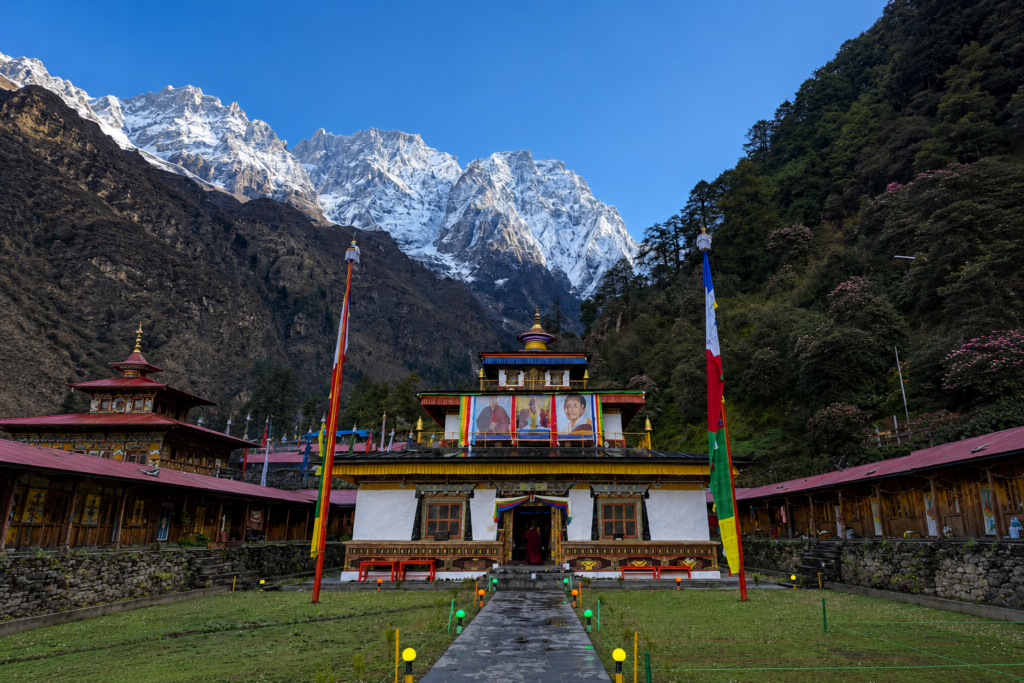
Tibetan Buddhism is not just practiced here; it is woven into the very fabric of daily existence. You will walk past ancient, intricately carved Mani walls, spin hundreds of brass prayer wheels, and pass beneath stone Kani gates painted with protective deities. Monasteries (gompas) act as the central pillars of the community.
If your timing aligns with the lunar calendar, you may witness vibrant regional festivals. The Mani Rimdu festival, which traces its origins to the 19th century, is a spectacular multi-day event that commemorates the 8th-century Buddhist master Padmasambhava and his subjugation of local mountain deities. It features mesmerizing, colorful mask dances, deeply resonant chanting, and communal feasts.
For those who venture into the adjoining Tsum Valley—often called the “Hidden Valley of Happiness”—the spiritual connection deepens further. This valley is home to a meditation cave used by the revered 11th-century Buddhist saint Milarepa. In 1920, the entire Tsum Valley was officially declared a ‘Shyagya’, a strictly non-violent area where the hunting of animals and the taking of life is culturally and religiously forbidden. Traces of the ancient, shamanic Bon religion—which predates Tibetan Buddhism and revolves around intense nature worship—can still be found echoing in the rituals of these upper valleys.
Strategic Side Trips: The Hidden Gems You Cannot Miss
One of the biggest mistakes trekkers make on the Manaslu Circuit is rushing through the itinerary. To truly experience the magic of this region—and to properly acclimatize your body to the thinning oxygen—you must take advantage of the spectacular side excursions. These detours elevate the trek from a standard hike into a profound exploration.
1. Pungyen Gompa (Approx. 4,000m)
This is arguably the most breathtaking and emotionally resonant side trip on the entire circuit. Located on a vast, wind-swept plateau directly beneath the towering east face of Mount Manaslu, Pungyen Gompa is a sanctuary with a dark and powerful history. Originally built around 1600 CE, the monastery stood peacefully for centuries until a catastrophic event in 1953. Following an early, intrusive Japanese climbing expedition, a massive glacial serac collapsed, triggering an avalanche that utterly destroyed the monastery and tragically killed 18 people. The local Nubri people attributed the disaster to the anger of the mountain deity, Lord Pungyen.
The monastery was painstakingly rebuilt by villagers between 1954 and 1957. Today, it stands as a testament to Himalayan resilience. Trekkers who make the 6 to 7-hour round trip hike from Samagaun are often rewarded with a red wool wrist cord (khatag) blessing from the resident monks. The view of Manaslu’s south face from this meadow is universally considered the best on the entire trail.
2. Rui La Pass and the Tibetan Border (4,998m)
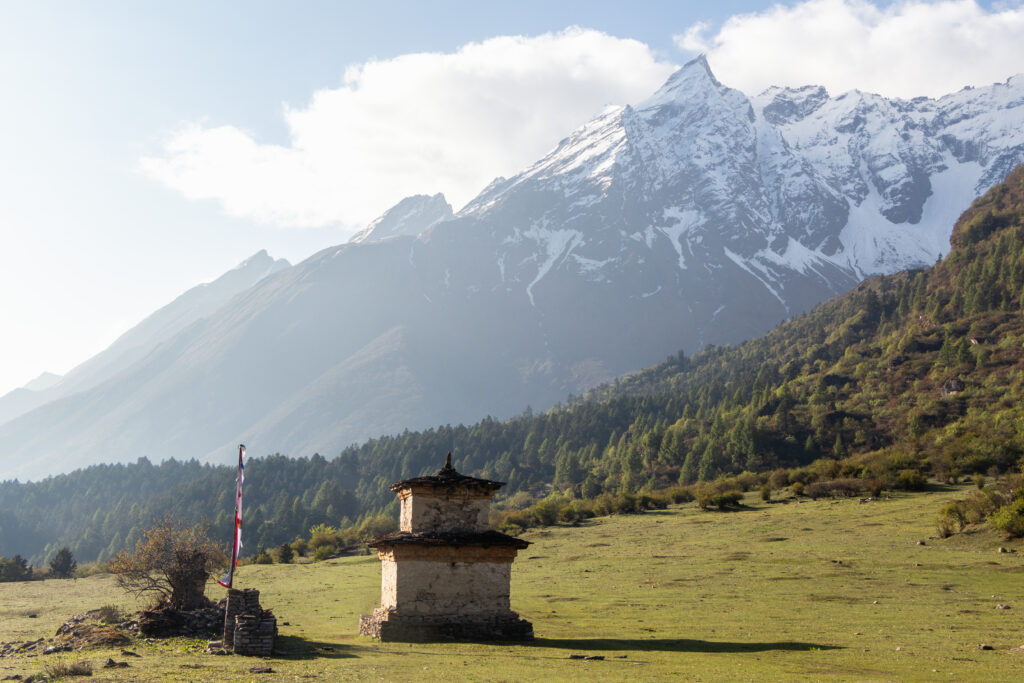
While every trekker crosses the famous Larkya La Pass, very few realize that an ancient gateway to Tibet is just a day hike away from the village of Samdo. The Rui La Pass sits at an imposing 4,998 meters. The 7 to 8-hour round-trip hike takes you along a historic salt and wool trading route that has been used by yak caravans for centuries,.
Upon reaching the pass, you will find the official border pillars dividing Nepal and China. Standing at the edge of the vast, barren Tibetan plateau with zero crowds around you is an intensely isolating and powerful experience. This hike also serves as the ultimate “climb high, sleep low” acclimatization exercise before tackling Larkya La.
3. Kal Tal – The “Death Lake” (3,600m)
For those seeking true off-the-beaten-path wilderness, Kal Tal is a hidden gem. Translating ominously to “Death Lake,” this enigmatic body of water is situated at 3,600 meters and is accessed via a steep, challenging ascent from the lower village of Prok ,. Deeply rooted in local folklore and believed to possess potent spiritual energy, the lake offers absolute solitude, perfect mirrored reflections of the surrounding peaks, and a glimpse into the untouched, rugged beauty of the lower Manaslu region.
4. Birendra Lake (3,450m)
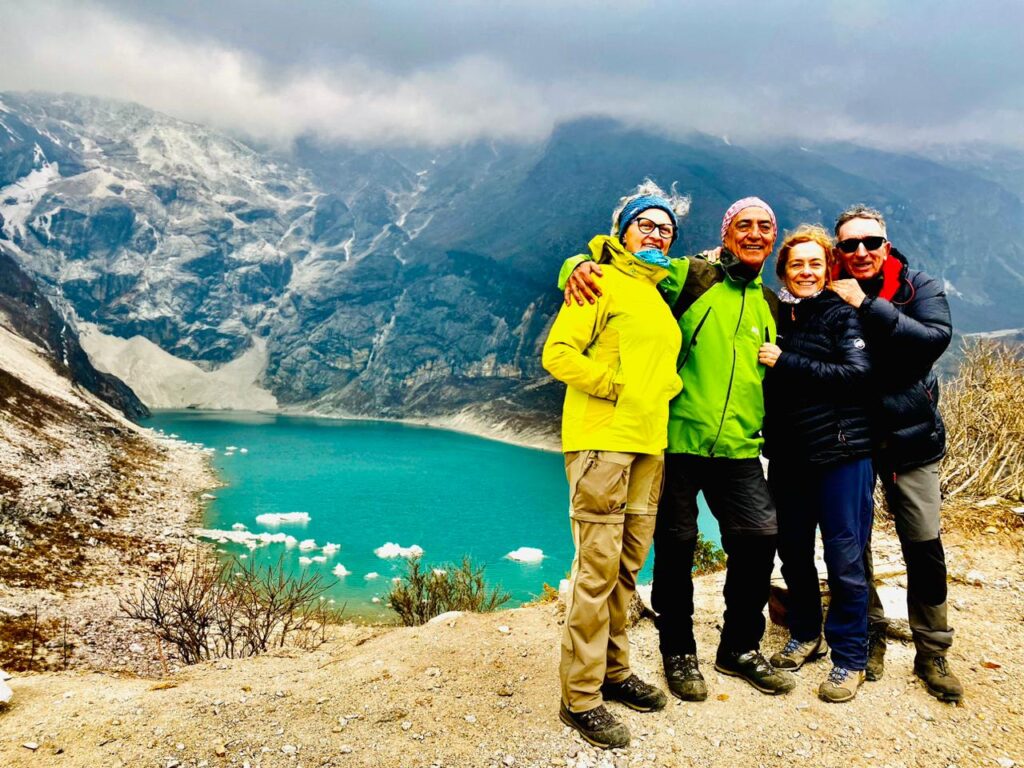
Located just an hour’s walk from the stone roofs of Samagaun, Birendra Lake is a visually striking, emerald-turquoise glacial lake. It is fed directly by the freezing, crystalline meltwaters of the Manaslu and Syacha glaciers. Sitting by its serene shores provides a stunning visual contrast against the stark alpine environment and serves as an excellent, gentle active-recovery hike for tired legs.
The Ultimate 15-Day Manaslu Circuit Trek Itinerary
While aggressive trekkers can compress this route, a 15-day itinerary is the globally recognized standard for balancing physical exertion with necessary altitude acclimatization. Here is how your journey will unfold.
Phase 1: The Sub-Tropical Gorge
- Day 1: Kathmandu to Machha Khola (930m). The expedition begins with a bone-rattling 8 to 10-hour drive. Thanks to ongoing road construction, the functional trailhead has moved from Soti Khola up to Machha Khola, allowing you to bypass the hottest, dustiest sections of the lower valley.
- Day 2: Machha Khola to Jagat (1,340m). You officially begin walking, following the violent, churning waters of the Budhi Gandaki River. The environment is distinctly sub-tropical—humid, green, and defined by sheer cliff faces and long suspension bridges. At Jagat, you enter the official Restricted Area.
- Day 3: Jagat to Deng (1,804m). The trail undulates through deepening forests and traditional Gurung villages. The gorge narrows significantly, showcasing the raw, erosive power of the river below.
Phase 2: The Transition to the Tibetan Highlands
- Day 4: Deng to Namrung (2,630m). As you breach the 2,500-meter mark, the climate cools drastically. The sub-tropical jungle is replaced by dense coniferous forests and blooming rhododendrons. You will begin to notice the distinct architectural shift toward Tibetan styles.
- Day 5: Namrung to Samagaun (3,530m). This is a magical day. The valley widens, and the panoramic vistas of Mount Manaslu finally reveal themselves. You will pass through the beautiful villages of Lho and Shyala before arriving in Samagaun, the principal settlement of the Nubri people.
Phase 3: The Crucial Alpine Staging
- Day 6: Acclimatization in Samagaun. This is not a rest day. You must practice the “climb high, sleep low” principle. This is the perfect time to hike to Pungyen Gompa, Birendra Lake, or the Manaslu Base Camp (4,848m).
- Day 7: Samagaun to Samdo (3,875m). A short, 3 to 4-hour walk brings you to Samdo, the highest permanent settlement on the route. It sits perilously close to the Tibetan border.
- Day 8: Acclimatization in Samdo. An extra night here is vital for safety. Use this day to execute the thrilling hike up to the Rui La Pass at the Tibetan border.
- Day 9: Samdo to Dharamsala / Larke Phedi (4,460m). A short but exhausting push brings you to the desolate, wind-swept high camp of Dharamsala. Altitude discipline here is critical. Rest, hydrate, and conserve every ounce of energy.
Phase 4: The Crucible and the Descent
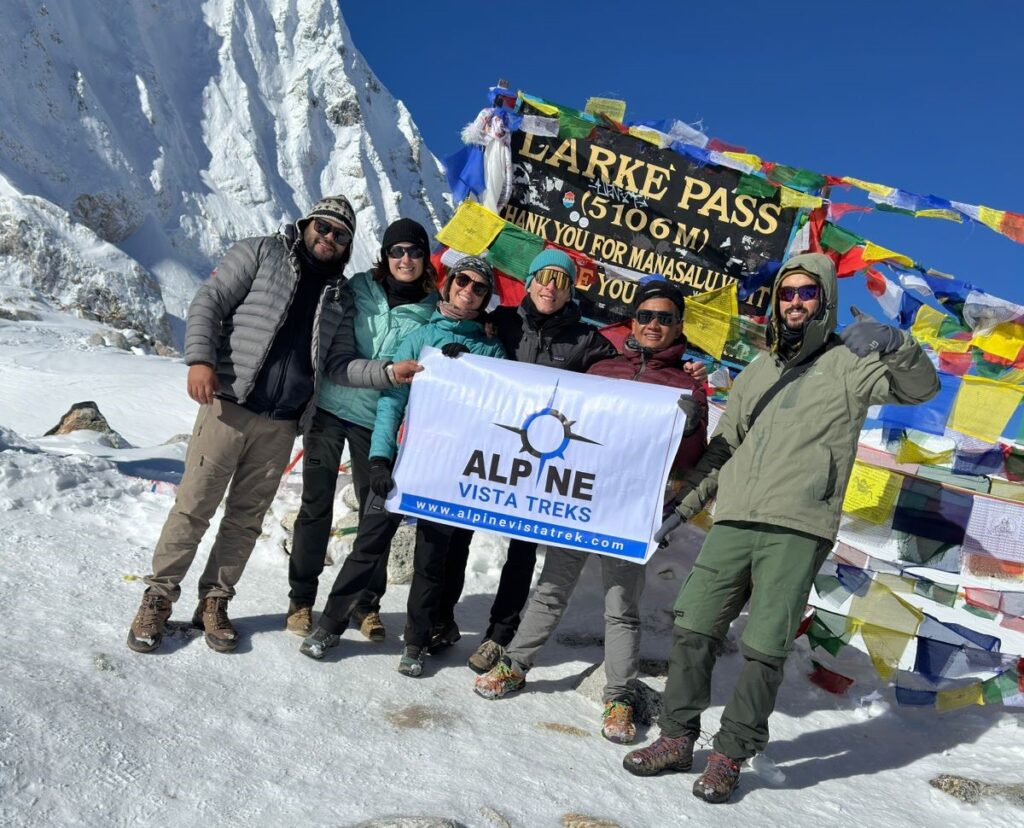
- Day 10: Dharamsala to Bimthang (3,720m) via Larkya La Pass (5,160m). The climax of the trek. You will wake up at 3:30 AM and begin hiking by headlamp.
- Day 11: Bimthang to Tilije (2,300m). A brutal but beautiful descent through lush, highly oxygenated alpine forests. The relief in your lungs will be immediate.
- Day 12: Tilije to Dharapani (1,860m). A short walk brings you to Dharapani, where the Manaslu Circuit merges with the Annapurna Circuit.
- Day 13/14: Dharapani to Kathmandu. You will catch a local jeep for the long, winding drive back to civilization, officially concluding the expedition.
Surviving the Crucible: Larkya La Pass at 5,160m
The central challenge of the Manaslu Circuit is not technical mountaineering. You do not need ropes, crampons, or ice axes. The true difficulty lies in the extreme physiological stress exerted upon the human body by sustained, relentless high-altitude exertion.
The metrics of the pass day are staggering. It requires 8 to 10 hours of sustained physical output to cover roughly 24 kilometers. By the time you reach the 5,160-meter saddle, the barometric pressure has plummeted so drastically that you are breathing in approximately 50 percent of the oxygen available at sea level.
Your day will begin in Dharamsala in absolute arctic conditions, often dropping below -15°C. Expedition groups mobilize between 4:00 AM and 4:30 AM to avoid the severe, dangerous wind chills that predictably batter the pass by late morning. The ascent terrain consists of undulating, treacherous glacial moraines and loose scree. It is a slow, agonizing crawl.
However, upon cresting the pass, the suffering evaporates. You are rewarded with an extraordinary, life-affirming 360-degree panorama encompassing majestic peaks such as Himlung Himal, Cheo Himal, Kang Guru, and Annapurna II.
The Threat of Acute Mountain Sickness (AMS)
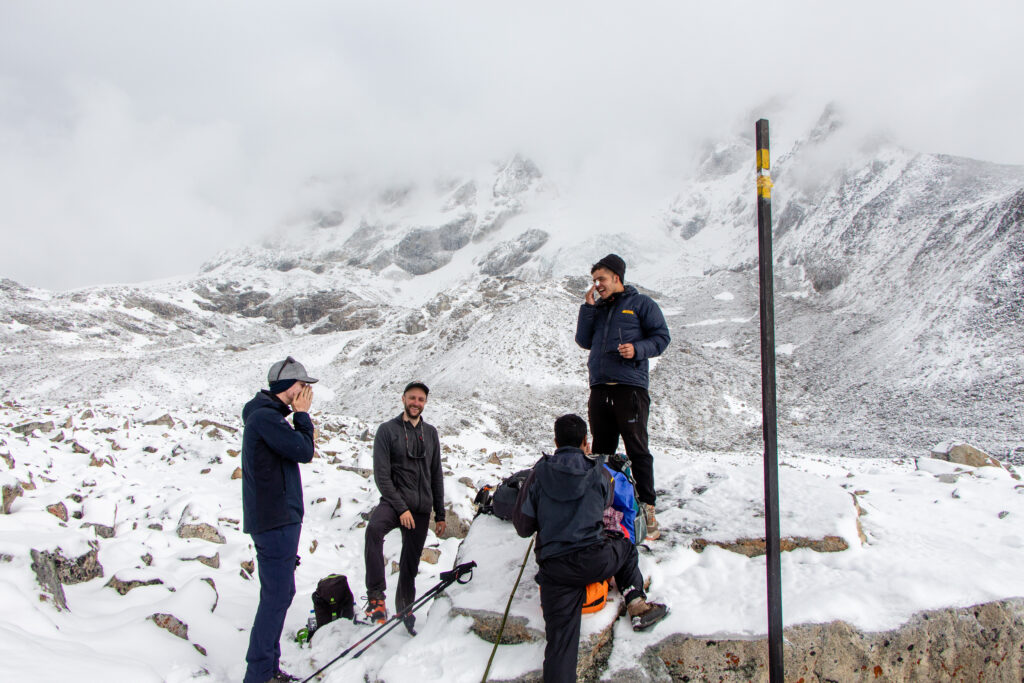
You must respect the altitude. Between 40 and 60 percent of individuals entering elevations above 3,500 meters will experience mild symptoms of AMS. It is an indiscriminate biological response that affects marathon runners and couch potatoes equally.
If you experience persistent frontal headaches, nausea, profound lethargy, or a loss of physical coordination, you must immediately communicate this to your licensed guide. The only cure for moderate to severe AMS is an immediate descent of 300 to 500 vertical meters. Ignoring symptoms can rapidly lead to High Altitude Pulmonary Edema (HAPE) or High Altitude Cerebral Edema (HACE), which are fatal without immediate helicopter evacuation. Drink 3 to 4 liters of water daily, ascend slowly, and consider discussing the prophylactic use of Diamox (acetazolamide) with your doctor before departure.
Budgeting for Manaslu: 2026/2027 Cost Breakdown
The economic model of the Manaslu Circuit operates on a strict, altitude-adjusted inflation curve. Because functional road access ceases early in the trek, every grain of rice and canister of cooking gas must be transported up the gorge via pack mule trains or human porters. Consequently, the cost of living rises proportionately with your elevation.
Here is a granular breakdown of what you can expect to spend in the 2026 and 2027 seasons.
The Mandatory Permits
The Manaslu region requires a complex matrix of permits. The pricing fluctuates based on seasonal volume to prevent overcrowding.
| Permit Type | Peak Season Cost (Sept – Nov) | Off-Peak Season Cost (Dec – Aug) |
| Manaslu Restricted Area Permit (RAP) | $100 for first 7 days + $15/extra day | $75 for first 7 days + $10/extra day |
| Manaslu Conservation Area Permit (MCAP) | $23 (NPR 3,000) | $23 (NPR 3,000) |
| Annapurna Conservation Area Permit (ACAP) | $23 (NPR 3,000) | $23 (NPR 3,000) |
| Chumnubri Rural Municipality Fee | $8 (NPR 1,000) | $8 (NPR 1,000) |
(Note: The Chumnubri Municipality Fee has entirely replaced the outdated TIMS card for this specific region.)
Labor and Logistics
If you are utilizing the new 2026 solo permit rules to organize your trek semi-independently through an agency like Alpine Vista Treks, you will need to pay for your mandatory staff.
- Licensed Guide: $30 to $35 per day. This covers their salary, mandatory insurance, meals, and accommodation.
- Porter (Optional but highly recommended): $20 to $25 per day. A porter will carry 20-25kg, which is typically the combined duffle weight of two trekkers.
Food, Lodging, and the Hidden Micro-Economy
Lodging throughout the circuit is heavily subsidized. Teahouse rooms typically cost a mere $5 to $10 per night, but this is on the strict condition that you purchase your dinner and breakfast at their dining hall.
Food prices scale with altitude. The traditional Nepalese Dal Bhat (rice, lentil soup, and vegetable curry) is the most economically and biologically efficient fuel source, as it comes with unlimited refills.
- Dal Bhat: $7 to $9
- Mo:mo (Dumplings): $5 to $8
- Set Breakfast (Eggs, toast, potatoes): $6 to $8
- Chowmein or Noodles: $3 to $6
You must also budget for the “hidden economy” of high-altitude teahouses. Because these remote outposts rely on expensive solar arrays or micro-hydro setups, electricity is a commodity.
- Device Charging / Power Bank: $3 to $5 per full charge.
- Wi-Fi (Everest Link / Local Satellite): $3 to $5 per data package.
- Gas-Powered Hot Showers: $3 to $5 per use (where available).
Over a 14-day trek, expect to spend an average of $25 to $35 per day on meals, hot drinks, and these ancillary electronic services.
Essential Training and Packing List
Success on the Manaslu Circuit is determined long before you board your flight to Kathmandu. Professional guides stipulate a mandatory 8 to 10-week dedicated training block prior to departure. You must move beyond flat-surface jogging; incorporate heavy stair-climbing intervals with a weighted daypack to simulate the brutal descents of the gorge.
The Layering Paradigm
The circuit’s climate is violent and variable. You will experience 25°C in the humid sub-tropical valleys and below -20°C on the pre-dawn pass. Your clothing must reflect this.
- No Cotton: Cotton retains sweat, loses all insulating properties when wet, and invites hypothermia. Leave the jeans and cotton t-shirts at home.
- Base Layers: Bring two sets of high-quality merino wool or synthetic moisture-wicking thermals.
- Insulation: A thick fleece mid-layer and an expedition-grade down jacket rated to at least -15°C are non-negotiable.
- Outer Shell: A premium Gore-Tex waterproof and windproof shell jacket to block the biting winds of the Larkya La saddle.
- Sleeping Bag: The plywood teahouse rooms in Samdo and Dharamsala are unheated and incredibly cold. You must bring (or rent in Kathmandu) a sleeping bag rated to a minimum of -15°C.
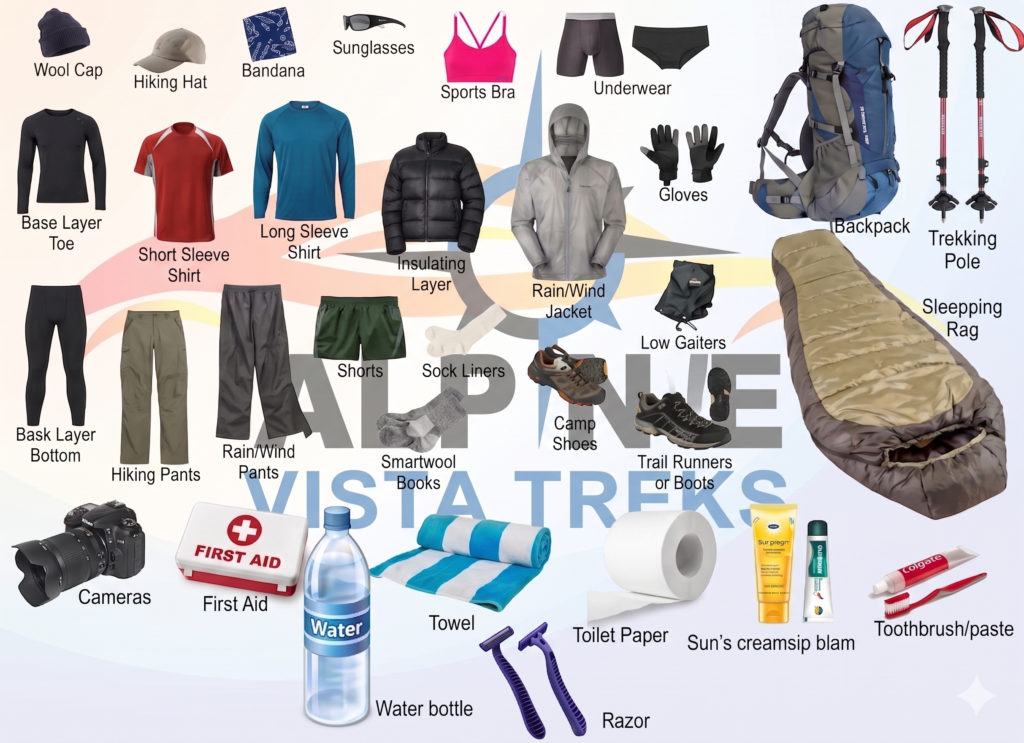
Do not forget to break in your waterproof trekking boots extensively before arriving. High-altitude blisters can single-handedly ruin a $1,500 expedition. Furthermore, bring collapsible trekking poles; they will reduce the immense mechanical strain on your knee joints during the brutal 1,400-meter descent from the pass to Bimthang by up to 30%.
Frequently Asked Questions – Larkya La Pass Trek
1. Where is the Larkya La Pass Trek located?
The Larkya La Pass Trek is located in the Manaslu Region of Nepal. It is part of the famous Manaslu Circuit trekking route and crosses the high mountain pass of Larkya La at 5,106 meters.
2. How difficult is the Larkya La Pass Trek?
The trek is considered moderately difficult to challenging. Trekkers need good physical fitness because of long walking days, steep ascents, and high altitude conditions.
3. What is the best time for the Larkya La Pass Trek?
The best seasons are spring (March–May) and autumn (September–November). During these months, the weather is stable, mountain views are clear, and trail conditions are ideal.
4. Do I need a guide for the Larkya La Pass Trek?
Yes. The Manaslu Region is a restricted trekking area, and Nepal government regulations require trekkers to travel with a licensed guide through a registered trekking agency.
5. Which permits are required for the trek?
Trekkers need:
- Manaslu Restricted Area Permit (RAP)
- Manaslu Conservation Area Permit (MCAP)
- Annapurna Conservation Area Permit (ACAP)
6. How long does the Larkya La Pass Trek take?
Most itineraries range from 12 to 16 days depending on acclimatization days, side trips, road conditions, and trekking pace.
7. What is the highest point of the trek?
The highest point is Larkya La Pass at an elevation of 5,106 meters (16,752 ft).
8. Is altitude sickness a concern on the trek?
Yes. Since the trek reaches above 5,000 meters, altitude sickness can affect trekkers. Proper acclimatization, hydration, and gradual ascent are essential.
9. Are tea houses available on the route?
Yes, there are basic tea houses throughout the trail offering accommodation and meals. Facilities become simpler and more limited at higher elevations.
10. Why is the Larkya La Pass Trek considered one of Nepal’s best remote treks?
The trek offers untouched Himalayan scenery, authentic Tibetan-influenced villages, fewer crowds, dramatic mountain landscapes, and a true wilderness trekking experience compared to busier trekking routes in Nepal.
Conclusion
As the adventure tourism industry moves into 2026, 2027, and 2028, the Manaslu Circuit Trek continues to stand among Nepal’s most rewarding Himalayan journeys. Combining remote alpine landscapes, authentic Tibetan Buddhist culture, and the legendary crossing of Larkya La Pass (5,106m), this trek offers a truly unforgettable experience far from the crowded trekking routes.
Although the updated permit system has made travel logistics more convenient, the challenges of high altitude and rugged mountain terrain remain very real. Proper acclimatization, physical preparation, and respect for the mountain environment are essential for a safe and successful journey.
Beyond the dramatic scenery, the trek provides a rare opportunity to connect with the spiritual traditions and warm hospitality of the Nubri and Tsum communities. Every trail, monastery, and mountain village adds depth to the adventure, making the Manaslu region one of the last great wilderness trekking destinations in Nepal.
For trekkers seeking an authentic Himalayan experience, crossing Larkya La Pass will remain one of the most remarkable and life-changing achievements in the Nepal Himalaya.
Plan your Manaslu adventure with Alpine Vista Treks for professional trekking services, experienced local guides, and personalized Himalayan journeys in Nepal.