Wi-Fi and Digital Payments on the Manaslu Circuit Trek may sound unlikely for a remote Himalayan journey, but this is exactly what makes the Manaslu Circuit Trek in Nepal so fascinating in 2026.
There was a time when trekking in the Himalayas meant complete disconnection from the modern world. No signal. No internet. Cash only. Total isolation.
Today, while Manaslu remains one of Nepal’s most restricted, culturally preserved, and least commercial trekking regions, it is quietly adapting to the needs of modern travelers — especially digital nomads, remote workers, travel bloggers, and online entrepreneurs who want to combine high-altitude adventure with basic online productivity.
You will not find fiber internet, coffee shops, or coworking spaces here. Instead, you will find something far more remarkable: just enough Wi-Fi, just enough telephone network, and just enough digital payment access to stay connected when necessary — without losing the raw wilderness experience.
This rare balance is why Wi-Fi and Digital Payments on the Manaslu Circuit Trek has become a trending topic among modern trekkers.
The Rise of the Digital Nomad Trekker: Wi-Fi and Digital Payments on the Manaslu Circuit Trek
More travelers are no longer taking “vacations.” They are working while traveling. They carry laptops, power banks, satellite messengers, and rely on cloud platforms for their work. For them, the ability to send emails, upload photos, attend a short meeting, or make online payments is not a luxury — it’s a necessity.
The Manaslu Circuit, once considered too remote for such travelers, is now becoming a hidden favorite because:
- Teahouses now offer paid Wi-Fi in key villages
- NTC and Ncell mobile signals reach higher than before
- Solar charging stations are common
- Digital wallets and QR payments are slowly appearing
- Lodge owners understand the needs of remote workers.
Yet, the trail still feels wild, authentic, and untouched.
Navigating Connectivity: Wi-Fi and Cellular Reception
In the modern digital age, constant connectivity is a common, often demanded query. This topic must aggressively manage expectations by clearly stating that standard cellphone reception (NTC/Ncell) is highly unreliable or non-existent past the lower valleys, with locals and guides often relying on CDMA or V-Sat satellite phones for emergency communication. It should explain the micro-economics of the trail: while electricity (via solar panels or micro-hydro plants) and Wi-Fi are available in most teahouses, they are strictly commodified. Trekkers must expect to pay nominal, recurring fees to charge power banks or access slow, highly intermittent internet connections.
Where You Can Expect Wi-Fi on the Trail
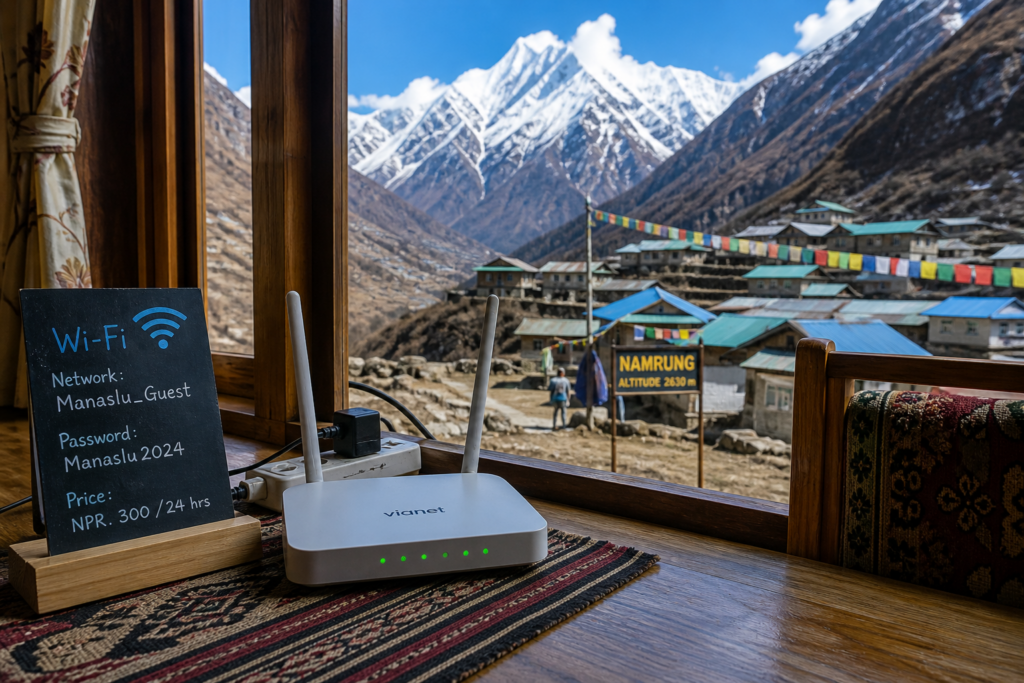
Wi-Fi is not available everywhere, and that is part of the charm. But in major overnight stops, you can usually buy Wi-Fi access from the teahouse owner for a small fee.
You can typically find Wi-Fi in villages such as:
- Machha Khola
- Jagat
- Deng
- Namrung
- Lho
- Samagaun
- Samdo
- Dharamsala (Very limited and weather dependent)
- Bimthang
- Tilije
The quality varies. Sometimes it is slow but usable for emails and messages. Sometimes it is surprisingly decent for uploading photos or joining a short call. And sometimes, due to weather or power issues, it may not work at all.
Digital nomads quickly learn to adapt their workflow:
- Upload when the signal is good
- Work offline during the day
- Send important files from lower villages
- Use evenings for communication
This rhythm fits perfectly with trekking life.
Mobile Network Coverage (NTC & Ncell)
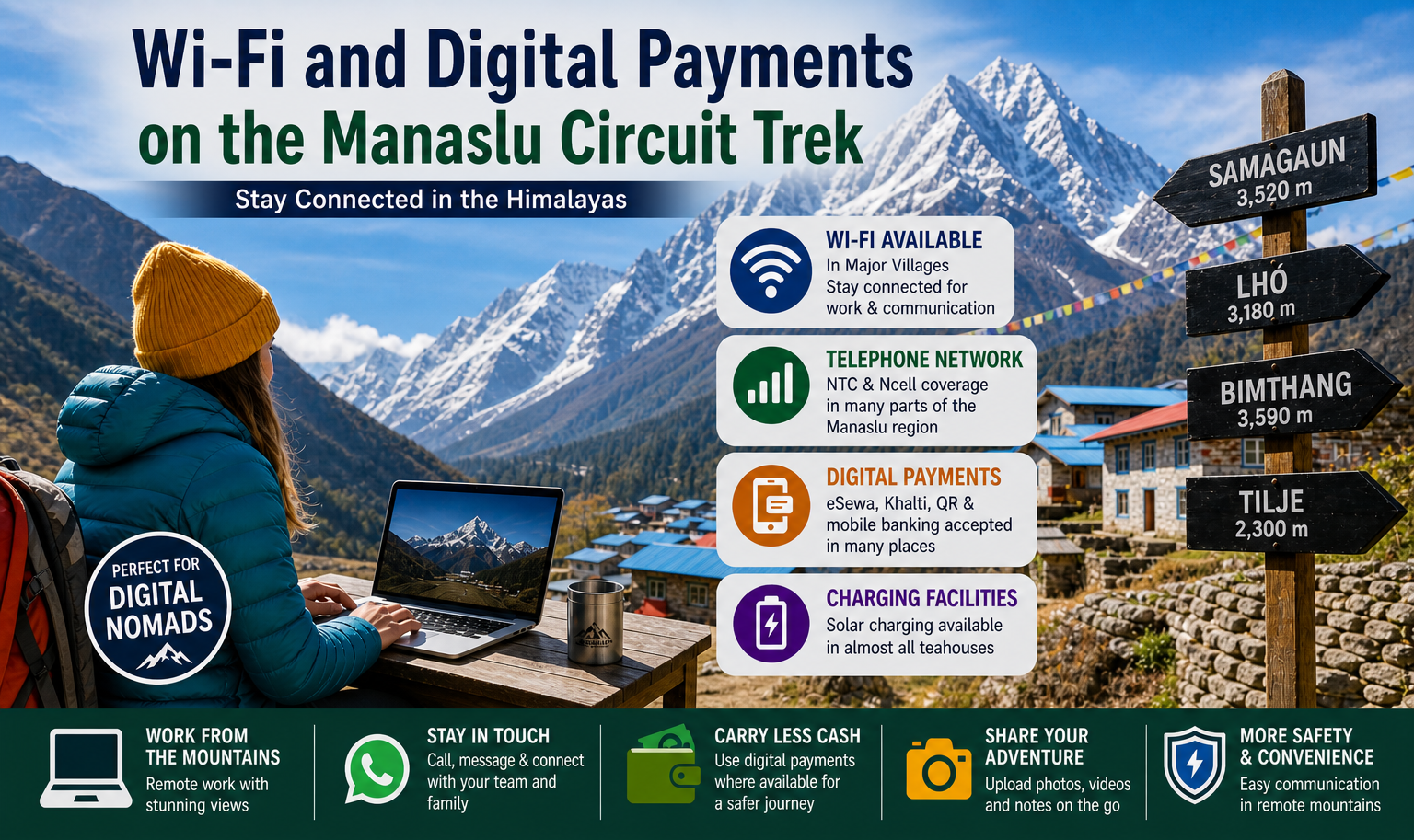
Many trekkers are surprised to discover that Nepal Telecom (NTC) and Ncell signals reach as high as Samagaun and occasionally Samdo. With a local SIM card and a data pack, you may get 3G or even 4G in some sections. NTC generally works better in remote mountain regions.
This means you don’t always have to rely on lodge Wi-Fi. You can:
- Check emails from your room
- Send WhatsApp messages
- Use maps and weather apps
- Make online payments when needed
For digital nomads, this is a game changer.
Charging Your Devices Is Easy
Almost all teahouses along Manaslu now run on solar power. Charging phones, power banks, cameras, and even laptops is possible for a small fee.
Smart trekkers carry:
- A 20,000–30,000 mAh power bank
- A multi-port charger
- A universal adapter
With this setup, you can easily stay powered throughout the trek without stress.
Telephone Network Coverage (Very Important for Trekkers)
One of the biggest surprises for trekkers is the availability of telephone signal on the Manaslu trail. With a SIM card from Nepal Telecom (NTC) or Ncell, you can make voice calls from many villages. NTC works better in higher regions. Ncell performs well in the lower sections. You can often make phone calls from:
Soti Khola, Machha Khola, Jagat, Deng, Namrung, Lho, and Samagaun.
Signal becomes weak above Samagaun toward Samdo and Dharamsala, but below that, telephone access adds a huge level of safety and convenience. Trekkers can call family, contact their guide or agency, or handle urgent matters without depending only on Wi-Fi.
Mobile Data Works in Many Places
Besides Wi-Fi, mobile data (3G/4G) works in surprising sections of the trek. With an NTC data pack, you may be able to:
- Send WhatsApp messages
- Check emails
- Use Google Maps offline/online
- Access weather updates
- Make digital payments
For remote workers, this changes everything.
Digital Payments Are Quietly Spreading
Perhaps the most surprising change on the Manaslu trail is the slow adoption of digital payments.
In lower villages like Soti Khola, Machha Khola, Jagat, and even Namrung, you may find teahouses and shops accepting:
- eSewa QR payments
- Khalti
- Mobile banking transfers
- Bank QR codes
While cash is still king in higher regions, the need to carry large amounts of cash is reducing. Many lodge owners prefer digital payment because it is safer than storing cash in remote villages.
Digital nomads appreciate this because they can:
- Pay for Wi-Fi
- Pay for meals and rooms
- Settle lodge bills digitally
- Avoid carrying excessive Nepali rupees
This is a rare feature for such a remote Himalayan trek.
The Perfect Balance: Connected but Not Distracted
What makes Manaslu ideal for remote workers is not full connectivity — it is partial connectivity.
You are connected just enough to:
- Handle essential work
- Communicate with clients
- Upload content
- Make payments
But disconnected enough to:
- Focus deeply
- Experience nature
- Avoid social media overload
- Reset mentally
Many digital nomads say they are more productive on this trek than in cities because distractions disappear.
Best Villages for “Work Stops”
If you plan your itinerary well, you can use certain villages as productive work stops:
Namrung & Lho – Good Wi-Fi, comfortable lodges, great mountain views
Samagaun – Best place for a rest day with decent connectivity
Bimthang – Reliable Wi-Fi after the pass, peaceful environment
Spending an extra night here allows you to catch up on work comfortably.
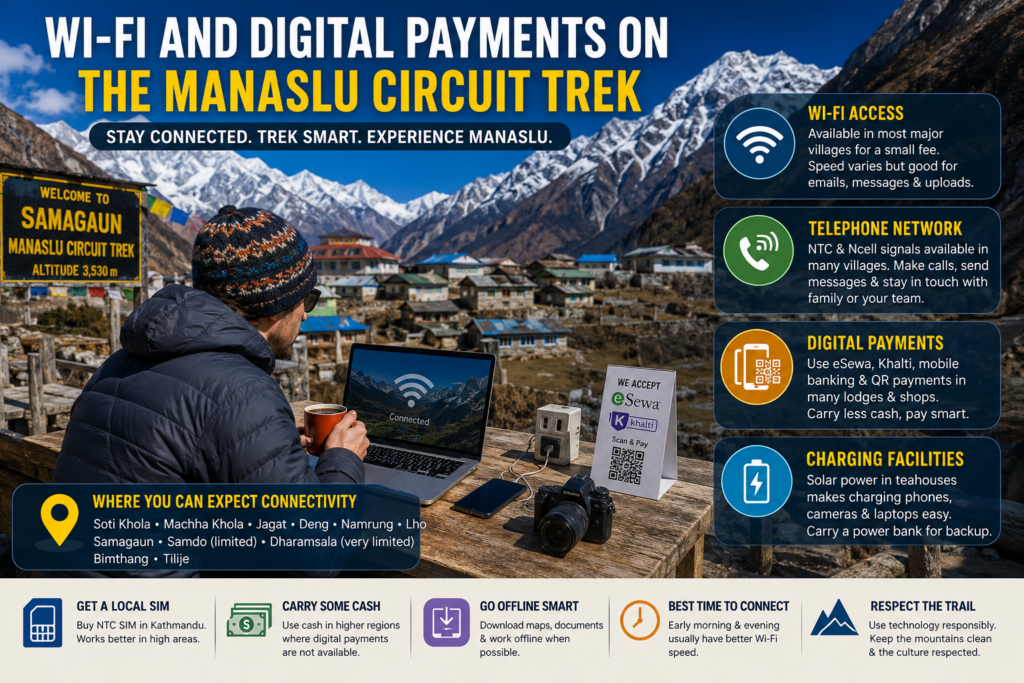
Practical Tips for Digital Nomads on Manaslu Circuit Trek
- Buy an NTC SIM in Kathmandu
- Carry enough cash but rely on digital where possible
- Download offline maps and documents
- Inform clients you’ll be in low-connectivity zones
- Work early mornings or evenings when Wi-Fi is faster
- Keep devices warm (cold drains batteries fast)
Why Manaslu Is Better Than Everest or Annapurna for Digital Nomads
Everest and Annapurna have stronger internet — but they also have crowds, noise, bakeries, bars, and constant distraction.
- Manaslu offers something unique:
- Light connectivity inside deep wilderness.
- You get the best of both worlds.
Trek with the Right Support
Trekking as a digital nomad requires flexible planning. You may want extra nights in certain villages, reliable charging options, and guides who understand your need to occasionally “work from the mountains.” This is where Alpine Vista Treks makes a difference.
Our team understands that modern trekkers are not just hikers — they are photographers, writers, remote employees, YouTubers, and entrepreneurs. We plan Manaslu itineraries that allow:
- Strategic overnight stops with Wi-Fi
- Proper time for rest and work
- Lodges known for better connectivity
- Charging access every day
- Flexible pacing
FAQs — Wi-Fi and Digital Payments on the Manaslu Circuit Trek
Is Wi-Fi available throughout the Manaslu Circuit Trek?
Wi-Fi is available in many main villages like Soti Khola, Jagat, Namrung, Lho, Samagaun, and Bimthang. It’s paid, weather-dependent, and best for emails and messages.
Which SIM card works best on the Manaslu trail?
A SIM from Nepal Telecom (NTC) generally provides better coverage in higher villages. Ncell works well in the lower sections.
Can I make phone calls during the trek?
Yes. Telephone signal is available in many villages up to Samagaun. Above that, signal becomes weak or unavailable.
Is mobile data (3G/4G) usable on the trek?
In several villages, mobile data works well enough for WhatsApp, emails, maps, and light browsing, especially with NTC.
Do teahouses have charging facilities for laptops and phones?
Yes. Most teahouses use solar power and offer paid charging for phones, cameras, power banks, and laptops.
Are digital payments accepted on the Manaslu Circuit Trek?
In lower and mid-trail villages, many lodges accept eSewa, Khalti, and QR/mobile banking payments. Cash is still needed in higher sections.
How much cash should I carry if digital payments are available?
Carry enough cash for 3–4 days at a time. Use digital payments where accepted, but don’t rely on them fully in remote areas.
Which villages are best for a ‘work and rest’ day with better connectivity?
Namrung, Lho, Samagaun, and Bimthang are known for relatively better Wi-Fi and phone signal.
Is Manaslu suitable for digital nomads and remote workers?
Yes. You get limited but usable connectivity without the distractions found on busier trails like Everest or Annapurna.
What’s the best time of day to use Wi-Fi on the trail?
Early mornings and late evenings usually offer better speed as fewer trekkers are online.
The Future of Trekking Is Hybrid
The Manaslu Circuit shows how Himalayan tourism is evolving responsibly. Technology is being adopted without destroying authenticity. Digital payments improve safety. Wi-Fi improves communication. But the mountains remain wild.
For digital nomads, this is the dream scenario.
You can send an email from 3,500 meters, pay your lodge bill with a QR code, charge your laptop with solar power — and still fall asleep under the shadow of Manaslu in complete silence. That contrast is unforgettable. And it’s exactly why more remote workers are choosing Manaslu over every other trek in Nepal.