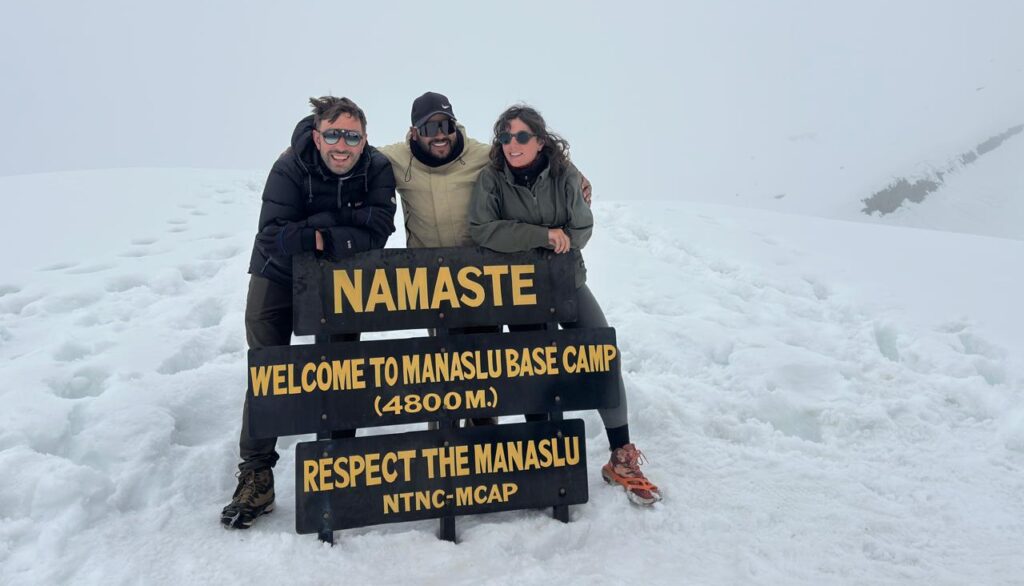
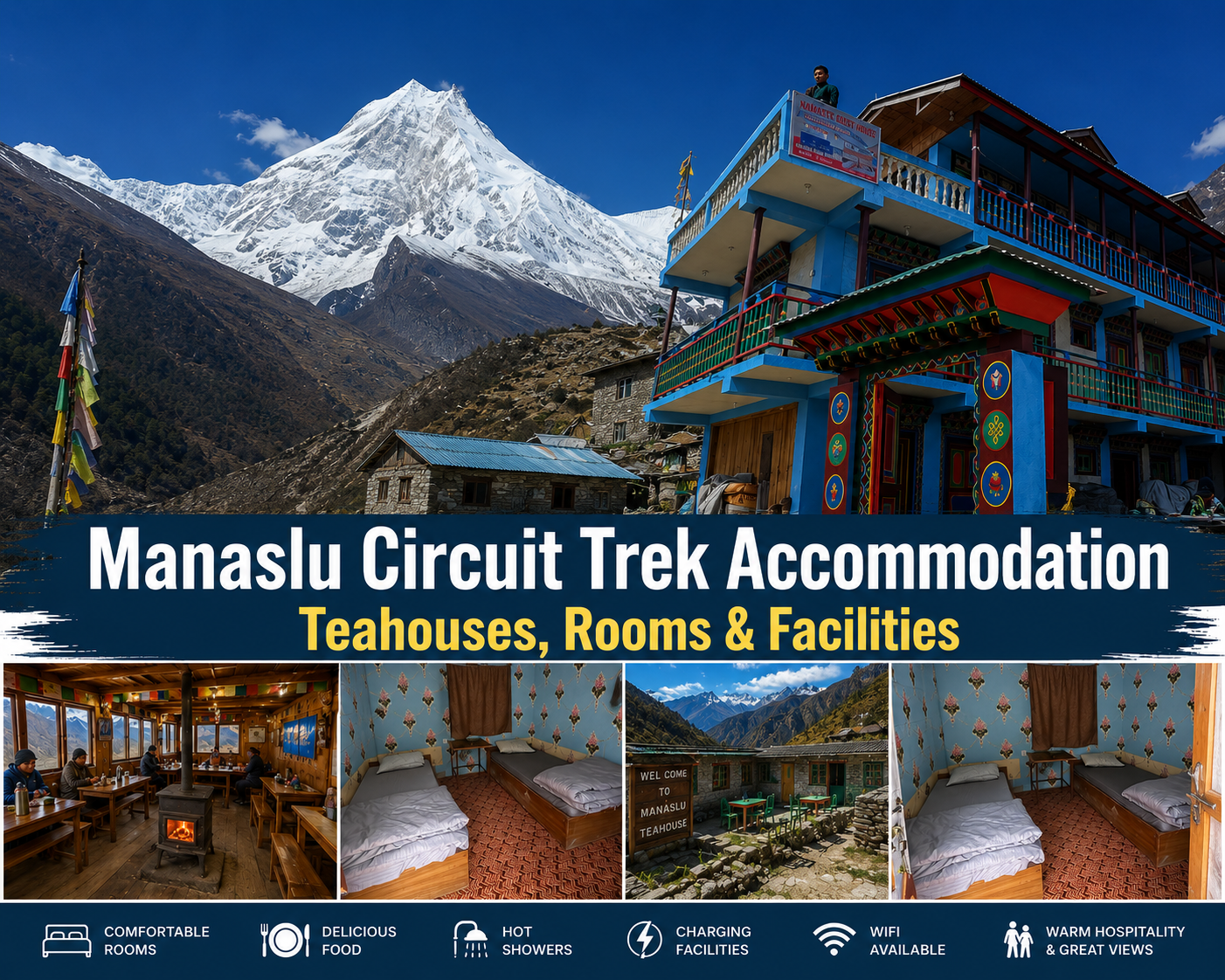
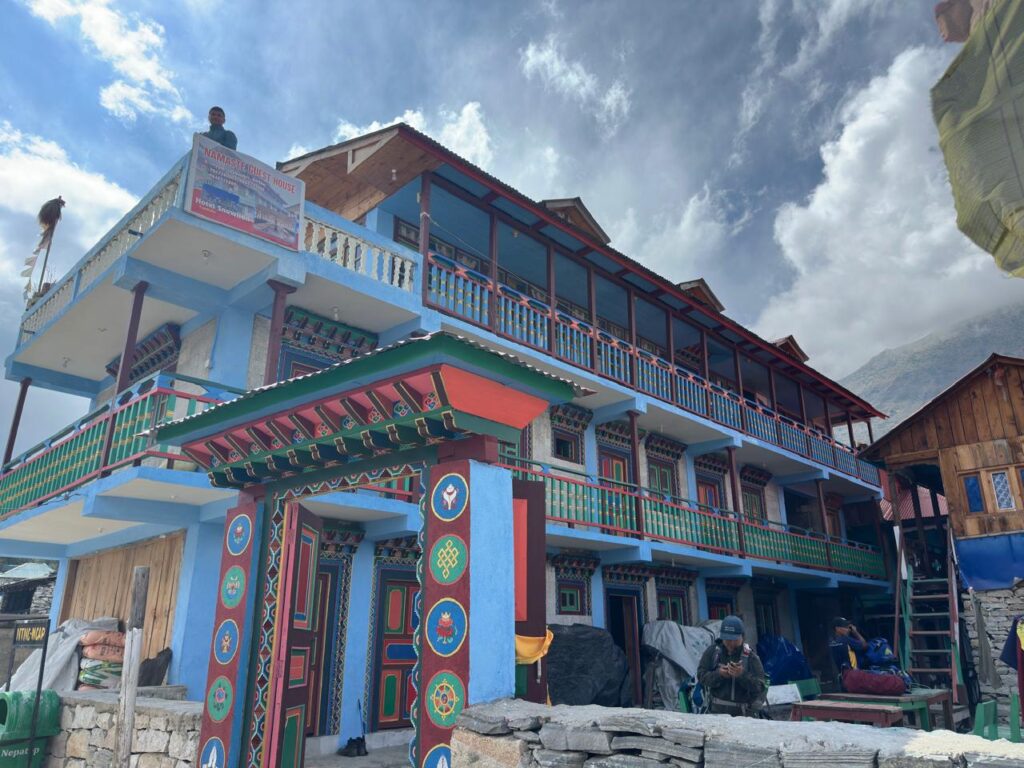
Manaslu Circuit Trek Accommodation 2026 is centered around simple, welcoming, family-run teahouses that provide trekkers with clean twin-sharing rooms, shared toilets, cozy dining halls, and freshly prepared meals throughout the entire route. From the trailhead at Soti Khola through Jagat and Namrung, facilities are relatively comfortable, with better room conditions and more service options. As you ascend to higher villages like Samagaun, Samdo, and the basic settlement of Dharamsala before crossing Larke Pass, the accommodation becomes more modest due to remoteness and altitude.
The rooms along the trail are mainly used for resting and sleeping, while most of the social life happens in the communal dining hall, where trekkers gather around a warm stove in the evenings to eat, share stories, and stay warm. In many villages, hot showers, Wi-Fi, and charging facilities are available for a small extra fee, though these services become limited as you go higher. Despite the simplicity of the rooms, the genuine hospitality, rich cultural environment, and breathtaking mountain surroundings make the lodging experience truly memorable. Trekking with Alpine Vista Treks also helps ensure proper room management during busy trekking seasons, making your stay along the Manaslu route smoother and more comfortable.
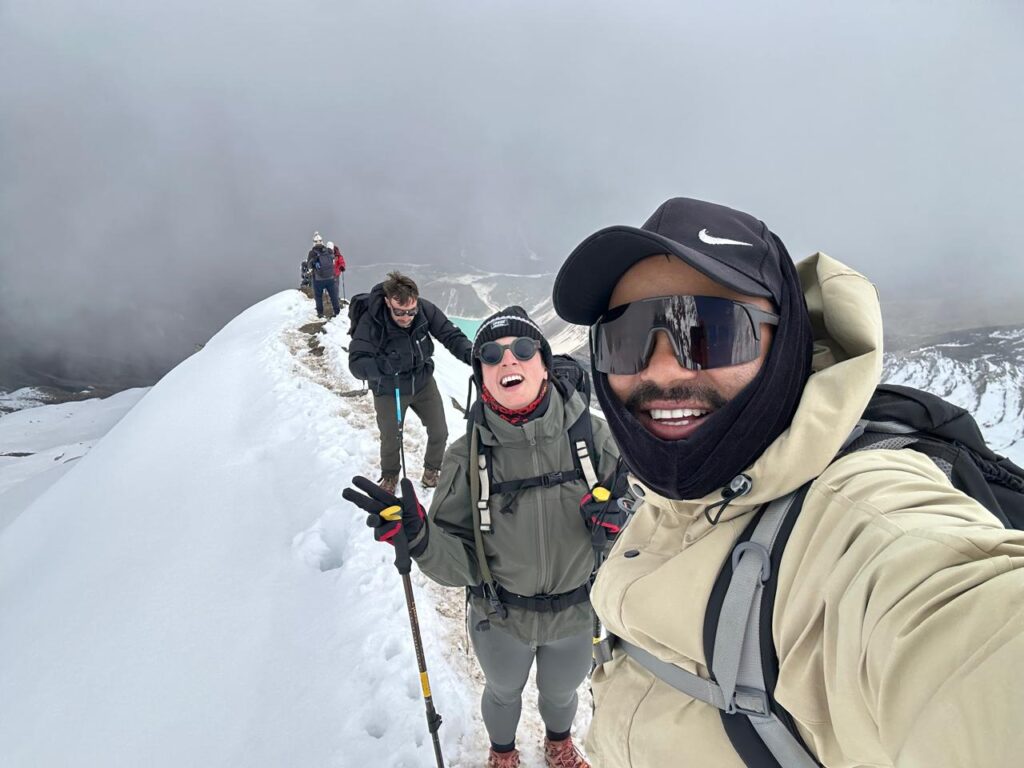
Manaslu Circuit Trek Accommodation 2026: Teahouses, Rooms & Facilities updated
In 2026, Manaslu remains one of the few trekking regions where this level of authenticity still exists. While facilities have slowly improved with better electricity and communication, the fundamental teahouse experience remains unchanged. It is simple, warm, communal, and deeply rooted in local culture.
For trekkers who understand and appreciate this style of mountain hospitality, accommodation on the Manaslu Circuit becomes a memorable part of the journey rather than a challenge. With realistic expectations, proper gear, and thoughtful planning, the teahouses of Manaslu provide everything needed for a safe, comfortable, and culturally rich trekking experience in the heart of the Himalayas.
1: The 2026 Regulatory Reforms (The Solo Permit Revolution)
A historic administrative shift occurred on March 22, 2026, when the Government of Nepal officially reformed restricted area permit rules. This reform eliminated the long-standing “minimum of two foreign trekkers” requirement to obtain the Manaslu Restricted Area Permit (MRAP).
The New Solo Traveler Reality
Under the 2026 regulations, solo foreign travelers can legally apply for and obtain the MRAP individually. This change streamlines logistics and eliminates the need to join a group of strangers or pay for fake “dummy” permits using fraudulent traveler details to bypass the old two-person rule. Checkpoints along the trail are highly strict. Any traveler caught with fraudulent permit configurations faces immediate deportation from the restricted conservation area and heavy fines ranging from NPR 10,000 to NPR 50,000.
The Non-Negotiable Guide Mandate
Despite the liberalization of individual access, independent, unguided trekking remains strictly prohibited. Every single trekker entering the restricted zone (which starts at the Jagat checkpoint) must be accompanied by a government-licensed guide registered with the Nepal Tourism Board and a Trekking Agencies Association of Nepal (TAAN) affiliated agency, such as Alpine Vista Treks.
The 2026 policy enforces a strict safety ratio of one licensed guide for a maximum of seven trekkers. Additionally, the old paper-based green Trekker’s Information Management System (TIMS) cards have been fully phased out and replaced by a centralized, digital e-TIMS system. Under this modern structure, our agency processes your e-TIMS permit in advance using your active visa application number, ensuring maximum accountability and immediate search-and-rescue coordination if necessary.
2026 Permit Cost Structure
To complete the full loop, you require three distinct permits and one local government entry fee. The cost of the Restricted Area Permit (RAP) varies by season and is calculated by the exact number of days spent between the Jagat entry post and the Dharapani exit post.
- Manaslu Restricted Area Permit (MRAP):
- Peak Season (September–November): $100 USD per person for the first 7 days, plus $15 USD per day thereafter.
- Off-Peak Season (December–August): $75 USD per person for the first 7 days, plus $10 USD per day thereafter.
- Manaslu Conservation Area Permit (MCAP): NPR 3,000 (approximately $23 USD) per person, collected by the National Trust for Nature Conservation (NTNC).
- Annapurna Conservation Area Permit (ACAP): NPR 3,000 (approximately $23 USD) per person, required for the exit leg after crossing the Larkya La Pass.
- Chumnubri Rural Municipality Local Fee: NPR 2,000 (approximately $15 USD) per person for local community development.
- Tsum Valley Permit (Optional Add-on): $40 USD per person for the first week in peak season; $30 USD in off-peak season.
2: 2026 Transportation Dynamics & Trail Compression
The geography of the lower Manaslu valley is undergoing rapid structural changes due to expanding vehicle roads. Historically, the classic trek required a grueling 8-to-10-hour drive from Kathmandu to Arughat or Soti Khola, followed by multiple days of walking up the subtropical river canyon.
The Road Beyond Machhakhola to Bangsing
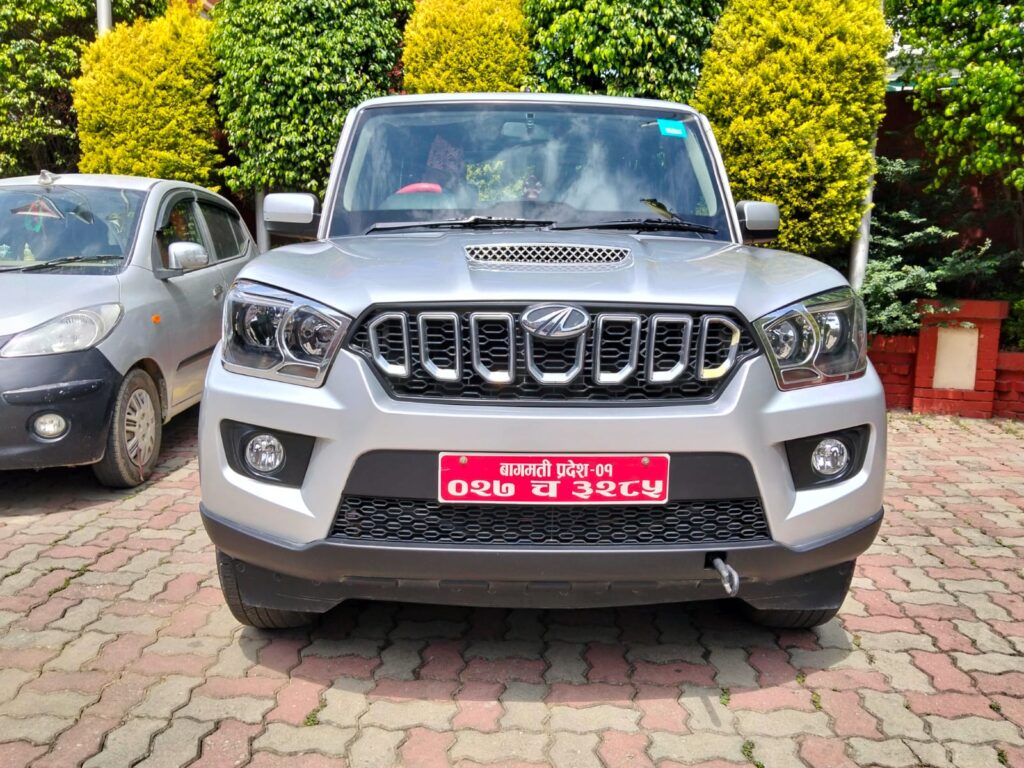
By 2026, motorized jeep roads have extended well beyond Machhakhola. Under favorable, dry conditions, 4WD vehicles can travel as far as Bangsing, located just below the key administrative village of Philim.
This road expansion significantly compresses standard trekking itineraries. Trekkers with limited schedules can travel via local bus from Kathmandu through Gorkha Bazaar directly to Machhakhola in 8 to 9 hours. From there, they can catch a shared local 4WD jeep for a 3-hour drive to Bangsing, allowing them to start hiking near Philim on their very first day of travel.
The Physiological and Economic Trade-offs
While this modernization provides logistical flexibility, it creates distinct physiological and economic challenges. Bypassing the lower, warmer sections of the trail (between 700 and 1,300 meters) deprives the body of a gradual physical conditioning phase. Trekkers who drive directly to higher elevations are pushed into rapid climbs with less time for altitude adaptation, which increases the risk of Acute Mountain Sickness (AMS) as they approach the high pass.
Furthermore, this road infrastructure is highly vulnerable to seasonal weather patterns. During the summer monsoon (June to September), heavy rains regularly trigger major landslides along the active Gorkha-Machhakhola-Bangsing route, blocking vehicle traffic and forcing travelers to revert to traditional footpaths.
From an economic perspective, the road has shifted the trekking landscape. Villages like Soti Khola and Machhakhola, which once thrived as active multi-night rest stops, have transitioned into high-turnover, motorized transit hubs. Consequently, many lower-valley lodge owners have seen their overnight bookings decline, prompting them to lower their rates to attract budget-conscious travelers.
At Alpine Vista Treks, we highly recommend our classic 15-day itinerary. It begins walking earlier to allow for a safer, more gradual approach, ensuring proper acclimatization and a fully immersive Himalayan journey.
3: The Anatomy of a Manaslu Teahouse
Trekking the Manaslu Circuit is fundamentally a teahouse-style journey. A teahouse is a family-run mountain lodge providing basic bed-and-board facilities.
Basic Room Construction
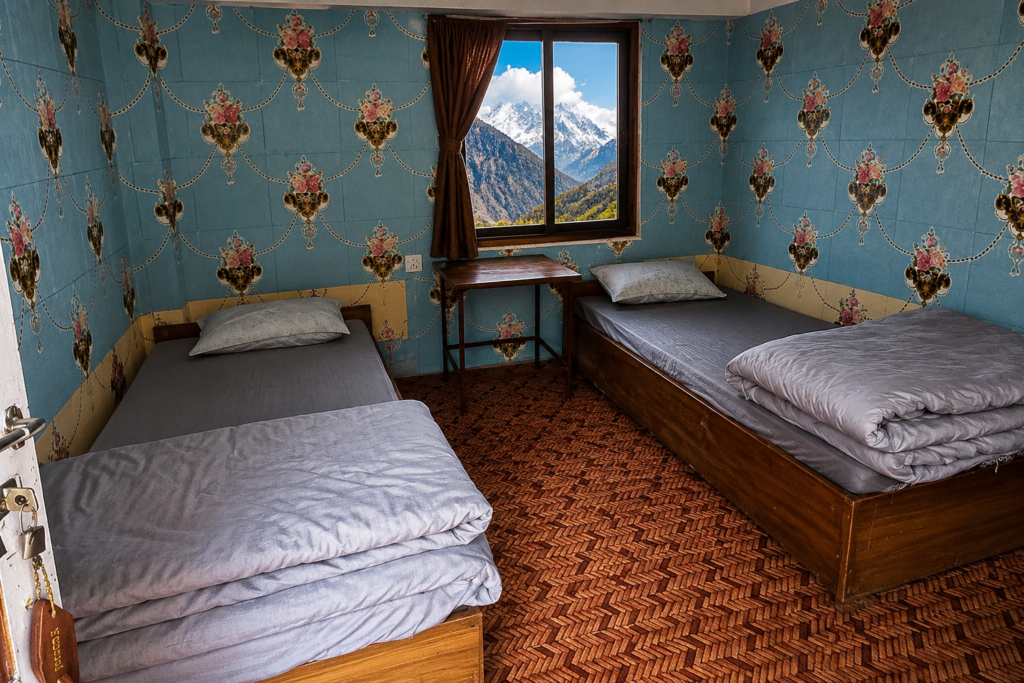
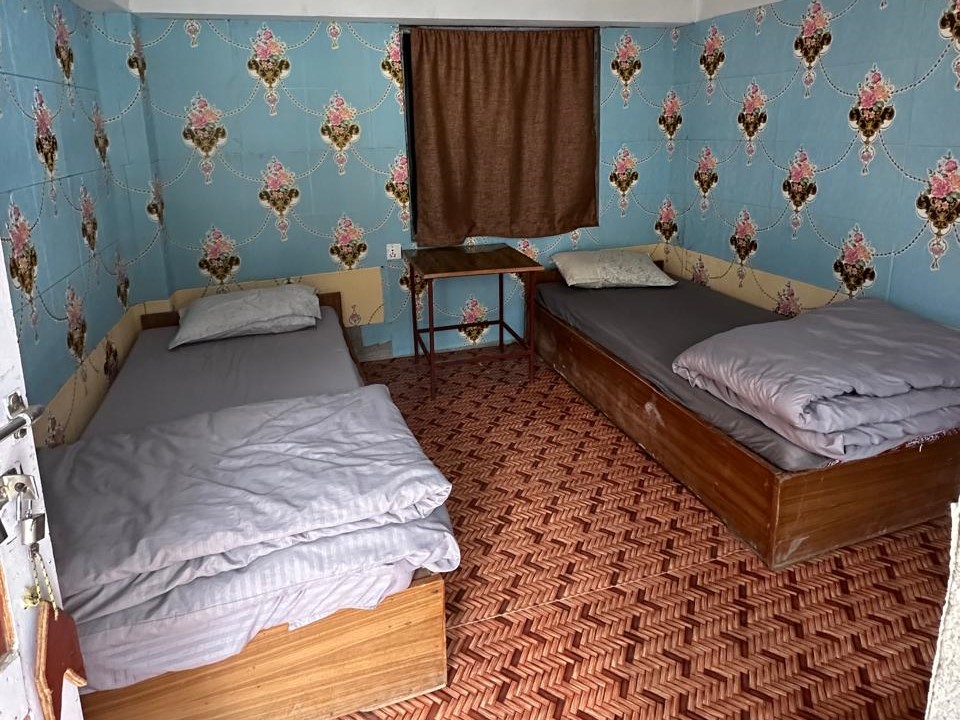
Guest rooms are simple and unheated, lacking modern wall insulation. Rooms typically feature two single wooden beds (twin-sharing) with thin foam mattresses, a pillow, a light bulb (electricity permitting), and a single blanket. Because these blankets are often insufficient for the freezing alpine nights, and sheets are rarely changed between guests, carrying a high-quality sleeping bag rated to at least -10 to -15 degrees Celsius is an absolute necessity.
The Dining Hall: The Warm Social Epicenter
Throughout the circuit, the guest bedrooms remain uncomfortably cold. Consequently, the social pattern of the trek centers around the communal dining halls. These spaces are heated in the evenings by central cast-iron stoves fueled by dried yak dung or wood. Trekkers gather there to dry damp clothing, socialize, enjoy hot meals, and warm up before retiring to their unheated bedrooms.
4: Village-by-Village Accommodations & 2026 Pricing Directory
The quality of accommodations, availability of amenities, and room rates along the circuit follow a distinct altitudinal gradient. In lower elevations, competition is high and rates are lower; as you ascend, logistics become complex, resources become scarce, and prices rise.
Here is our exclusive, comprehensive village-by-village directory with exact teahouse names and estimated 2026 room pricing (quoted per room, per night, assuming twin-sharing occupancy).
1. Machhakhola (Elevation: 900m)
Serving as the active starting point for many motorized itineraries, this village has a solid lodging infrastructure. Notable options include:
- Hotel Nirvana: $5 to $8 USD per night
- Hotel Larke Peak: $5 to $8 USD per night
- Hotel Chum Valley: $5 to $8 USD per night
- Tsum Valley Hotel: $5 to $8 USD per night
- Amenities: Reliable gas-heated showers, Wi-Fi, and mobile charging are widely available, often included in the room rate or for a very nominal fee.
2. Jagat (Elevation: 1,340m)
As the entry checkpoint for the restricted area, Jagat features well-built stone-and-wood lodges. Standard choices include:
- Manaslu Shanti Hotel: $6 to $9 USD per night
- New Mongolian Hotel: $6 to $9 USD per night
- Jagat Guest House: $6 to $9 USD per night
- Rubii Nala Guest House: $6 to $9 USD per night
- Amenities: Upgraded rooms with private, attached cold-water bathrooms are occasionally available here, providing a final touch of privacy before the trail enters remote sections.
3. Deng (Elevation: 1,860m)
This village marks the cultural transition into Tibetan Buddhist communities. The lodging options are simple and limited.
- Hotel ShangriLa Home: $6 to $9 USD per night
- Shangrilla Hotel: $6 to $9 USD per night
- Windy Valley Guest House: $6 to $9 USD per night
- New Manaslu Guest House: $6 to $9 USD per night
- Amenities: Rooms are uninsulated, and shared Asian-style squat toilets are standard. Hot showers are rare and dependent on firewood or gas availability.
4. Namrung (Elevation: 2,630m)
Serving as a key acclimatization and rest stop, Namrung marks the entry into the higher, more alpine Tibetan cultural zone of the Nubri Valley.
- Namrung Thakali Guest House: $7 to $10 USD per night
- Namrung River View: $7 to $10 USD per night
- Namrung Guest House: $7 to $10 USD per night
- Nubri Four Seasons Resort: (Premium luxury option detailed in Part 5)
- Amenities: Standard lodges offer reliable hot food, gas showers, and basic, weather-dependent Wi-Fi
- .
5. Lho Village (Elevation: 3,180m)
Renowned for spectacular, close-up views of Mount Manaslu and the active Ribung Gompa, Lho has several newly constructed teahouses.
- Hotel Blue Sky: $8 to $12 USD per night
- Majestic Manaslu: $8 to $12 USD per night
- Tashi Dalek Guest House: $8 to $12 USD per night
- Namaste Guest House: $8 to $12 USD per night
- Lama Guest House: $8 to $12 USD per night
- Amenities: Hotel Blue Sky offers impressive modern amenities, including hot showers, Wi-Fi, and sauna steam baths.
6. Shyala (Elevation: 3,500m)
Positioned in a wide glacial valley surrounded by peak views of Himal Chuli and Peak 29, Shyala is a scenic alternative to the busier hubs.
- Shanti Guest House: $8 to $12 USD per night
- Aama Hotel: $8 to $12 USD per night
- Shanti Hotel: $8 to $12 USD per night
- Nubri Shyala Cottage: $8 to $12 USD per night (features four rare rooms with attached private bathrooms).
7. Sama Gaun / Samagaon (Elevation: 3,520m)
The largest settlement in the Nubri Valley and the primary base for acclimatization hikes (to Birendra Lake or Manaslu Base Camp), Sama Gaun offers 20 to 25 teahouses.
- Hotel Bodhisattva: $9 to $12 USD per night
- Tashi Delek: $8 to $11 USD per night
- Mt. Manaslu Hotel: $9 to $12 USD per night
- Peace Heaven Guest House: $8 to $12 USD per night
- Norling Guest House: $8 to $12 USD per night
- Amenities: Many lodges offer solar hot showers, satellite Wi-Fi, and attached cold-water bathrooms, though these amenities can be highly inconsistent during freezing weather.
8. Samdo (Elevation: 3,860m)
The last permanent village before the high pass, Samdo is a windswept settlement located near the Tibetan border.
- Snowlion Hotel: $9 to $12 USD per night
- Zamballa Hotel: $9 to $12 USD per night
- Yak Hotel: $9 to $12 USD per night
- Tibetan Twin Hotel: $9 to $12 USD per night
- Amenities: Electricity is limited to solar or micro-hydro dining hall charging (NPR 500 to 1,000 per hour), and outdoor pit toilets are the norm. Wi-Fi is rare and satellite outages are common.
9. Dharamsala / Larkya Phedi (Elevation: 4,460m)
Located at the barren base of the pass, Dharamsala has only 2 to 3 seasonal community-run teahouses.
- Jambala Hotel: $10 to $15 USD per night
- Peaceful Hotel: $10 to $15 USD per night
- Larkey Guest House: $10 to $15 USD per night
- Amenities: Extremely basic, dormitory-style rooms with 4 to 5 beds per space. There is no Wi-Fi, no charging, no running hot water, and only external, cold pit toilets. (Detailed in Part 6).
10. Bimthang (Elevation: 3,720m)
Reached after a long, grueling descent from the Larkya La Pass, Bimthang is a welcoming valley with good lodging options.
- Ponker Guest House: $7 to $10 USD per night
- Apple Garden: $7 to $10 USD per night
- Ganga Manaslu: $7 to $10 USD per night
- Mountain Ponker Cottage: $7 to $10 USD per night
- Amenities: Excellent recovery facilities, including reliable solar and gas hot showers, Wi-Fi, and cozy dining halls.
5: The Mid-Altitude Luxury Oasis: Nubri Four Seasons Resort
To cater to travelers seeking higher levels of comfort, several premium properties have been built along the trail’s middle section, most notably the Nubri Four Seasons Resort in Namrung village at 2,650 meters.
The Vision and Concept
Designed by Lakpa Dhundup Lama, this resort features twenty upscale stone lodges with entrances styled after traditional Buddhist temples, a central courtyard, a minibar, a Finnish sauna, an on-site bakery (serving fresh apple pie), and a dining room equipped with a genuine Nespresso machine. Select high-end rooms include fireplaces and private ensuite bathrooms with dedicated hot water lines.
The Operational Realities of High-Altitude Luxury
While the resort represents a massive leap in comfort compared to standard teahouses, running a luxury lodge in a remote mountain valley presents significant challenges :
- Lack of Structural Cavity Insulation: Despite the high-end design, the guest rooms often lack modern insulation. Keeping the spaces warm requires continuous fireplace operation, and rooms cool down rapidly once the fire goes out, which can be disappointing given the high price point.
- Water System Failures: Extreme winter freezes frequently damage local plumbing, leading to inconsistent hot water delivery, low water pressure, and blocked shower drains.
- Supply Chain Cost Inflation: Because the resort is located past the end of the road, premium ingredients must be brought in on pack animals or by helicopter. This results in very high menu pricing for items like yak sizzlers and specialty breakfasts, which guests have noted do not always match standard luxury expectations.
Alpine Vista Treks’ Perspective: The Nubri Four Seasons Resort is a wonderful treat for a night or two of relaxation. However, guests must maintain realistic expectations: the rugged alpine environment and remote supply chain continue to limit overall service consistency compared to city hotels.
6: The High-Altitude Bottleneck: Dharamsala (4,460m)
In stark contrast to the emerging comforts of the middle trail, Dharamsala (Larkya Phedi) at 4,460 meters remains a highly challenging bottleneck. Situated at the base of the Larkya La Pass, it is a mandatory overnight stop for all ascending trekkers.
A Regulated Monopoly
Unlike lower villages with multiple competing lodges, Dharamsala’s accommodation is restricted to 2 to 3 seasonal teahouses (the Peaceful Hotel, Jambala Hotel, and Larkey Guest House) managed under a local cooperative supervised by the Manaslu Conservation Area Project (MCAP).
The conditions in Dharamsala are basic and present unique challenges :
- Dormitory Rooming: Private or single rooms are unavailable. Accommodations consist of simple dormitory rooms with 4 to 5 single wooden beds per space, offering minimal privacy.
- Lack of Facilities: The properties have no electricity, in-room power outlets, Wi-Fi, or running hot water. Toilets are limited to cold, external pit structures.
- Dining Room Congestion: The dining halls are small and highly crowded. To manage the flow of guests, teahouses enforce tight dining schedules (usually between 5:00 PM and 6:00 PM) to ensure everyone is fed.
- Overflow Tents: During the peak autumn seasons (particularly October), the number of trekkers often exceeds the available bed capacity. When the teahouses are full, operators house overflow guests in basic dome tents pitched on the rocky ground outside, which can be extremely cold.
The Physiological Risk
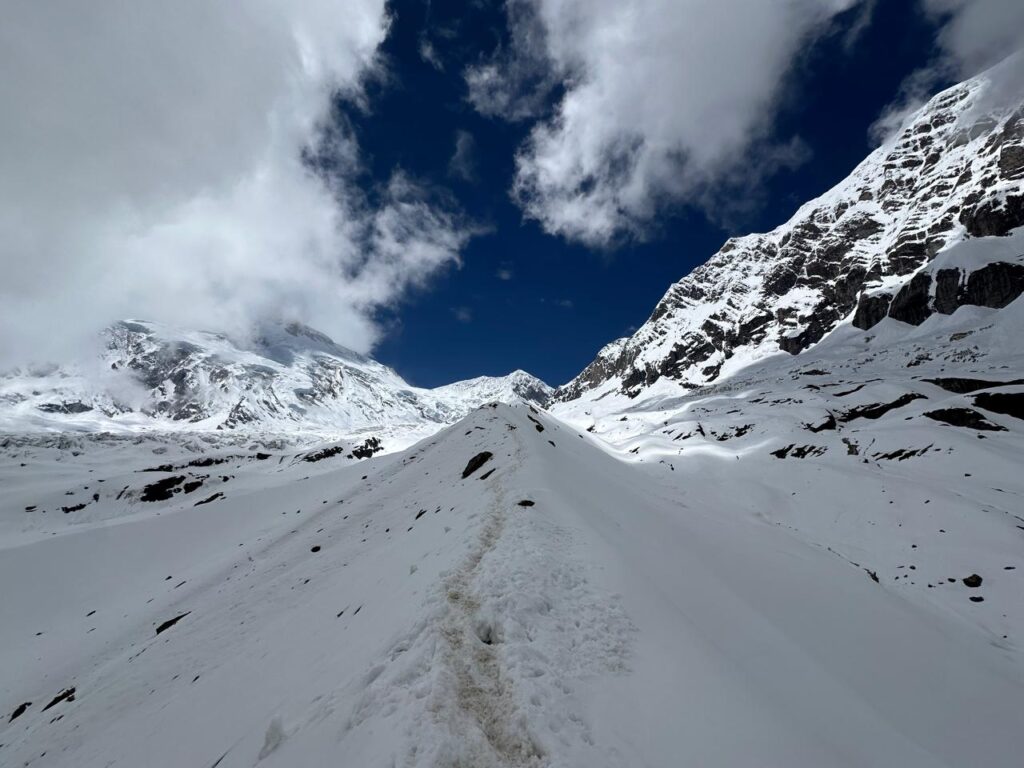
Crossing the Larkya La Pass requires an early morning departure (typically between 3:00 AM and 4:30 AM) to cross the glacier in stable morning conditions. Trekkers must climb steep, icy glacial moraines in sub-zero cold (ranging from -10 to -15 degrees Celsius) where the oxygen pressure is approximately 50% of sea-level pressure.
Poor sleep in unheated, crowded dormitories, combined with the difficulty of staying warm and hydrated at 4,460 meters, can lead to physical exhaustion and altitude-related illness during the final climb.
7: Micro-Amenities & Service Transitions by Altitude
The availability and cost of basic services change drastically as you gain elevation, reflecting the challenges of operating utility infrastructure in remote alpine environments.
| Elevation / Trail Zone | Wi-Fi Access & Rates | Power Charging Availability | Hot Shower Infrastructure | Rooming Policy & Supplements |
| Below 2,500m (Machha Khola to Namrung) | Inconsistent; sometimes available for NPR 300 to 500 per day. | Available; outlets in dining halls or standard rooms (NPR 200 to 500 per device). | Gas-heated showers; reliable pressure (NPR 200 to 300 per shower). | Single rooms often available for an extra NPR 200 to 400 per night. |
| 2,500m – 3,500m (Lho to Samagaun) | Rare and slow; sometimes available for NPR 500 to 800 per day. | Dining hall charging only; solar/hydro limitations (NPR 300 to 600 per hour). | Solar-heated showers; weather-dependent (NPR 300 to 500 per shower). | Single rooms sometimes available for an extra NPR 100 to 300 per night. |
| Above 3,500m (Samdo to Bhimthang) | Almost never available; satellite outages common. | Highly limited; restricted dining hall hours (NPR 500 to 1,000 per hour). | Showers unavailable; hot water buckets offered instead (NPR 500 to 800). | Rare; trekkers must share twin rooms with same-gender group members. |
| Dharamsala Stop (Larkya Phedi, 4,460m) | Completely unavailable. | Completely unavailable. | Completely unavailable. | Dormitory rooms only (4 to 5 beds); individual privacy not possible. |
8: The Culinary Landscape of Manaslu
The high-altitude logistics of the Manaslu region are governed by a steep pricing curve. Because motorized road access ends near Philim, all food, fuel, medicine, and building materials must be transported up the remaining 100+ kilometers of the trail via mule caravans or human porters. This reliance on pack animals means that prices for standard items double or triple as one ascends.
The Dining Contract
Standard teahouses along the circuit operate under an informal agreement where room rates are kept very low, provided that guests consume dinner and breakfast at the lodge where they stay. If a trekking group chooses to eat elsewhere, lodge owners will typically charge a significantly higher room rate to offset the loss of food revenue.
Staple Mountain Nutrition
Meals along the trail are simple but calorie-dense. Dal Bhat—consisting of steamed rice, lentil soup, vegetable curry, and spicy pickles—remains the staple meal, offering unlimited refills and excellent nutritional value for strenuous hiking.
At lower elevations, fresh vegetables, momos, and basic western dishes like pasta and pancakes are common. At higher stops like Samdo and Dharamsala, menus narrow significantly to dry grains, instant noodles, and hot garlic soup, which is a traditional local remedy for combating altitude-induced headaches and dehydration.
| Commodity / Provision Item | Low Elevation Pricing (<2,500m) | High Elevation Pricing (3,500m+) | Primary High-Altitude Transport Mechanism |
| Dal Bhat (Refillable) | NPR 500 to 600 ($4 to $5 USD) | NPR 1,000 to 1,200 ($8 to $9 USD) | Bulk grain sacks carried by mule caravans. |
| Fried Rice / Noodles | NPR 600 to 700 ($5 to $6 USD) | NPR 900 to 1,100 ($7 to $9 USD) | Packaged goods transported on pack animals. |
| Basic Breakfast (Oatmeal/Eggs) | NPR 400 to 500 ($3 to $4 USD) | NPR 600 to 800 ($5 to $6 USD) | Porters carrying delicate fresh egg crates. |
| Hot Drinks (Tea/Coffee) | NPR 100 to 150 ($1 to $1.50 USD) | NPR 200 to 300 ($2 to $3 USD) | Propane cylinders and sugar bags carried by mules. |
| Bottled Water (1 Liter) | NPR 100 to 150 (~$1 to $1.50 USD) | NPR 300 to 400 (~$3 to $4 USD) | Large plastic crates carried on pack animals. |
| Local Beer (Can/Bottle) | Standard Market Rate | ~$8.00 USD (In Samdo) | Manual porterage over long mountain distances. |
To reduce daily expenses and minimize plastic waste, we highly recommend avoiding bottled water. Instead, bring water purification tablets, chlorine dioxide drops, or UV filters.
9: Comparing Trekking Packages
In 2026, the overall cost of a Manaslu Circuit Trek varies based on the level of support and service selected. Trekkers generally choose between three main categories :
| Feature Comparison | Budget-Joining Group | Standard Agency Package | Premium Full-Service Tour |
| Total Base Package Cost | $1,200 to $1,800 USD | $1,800 to $2,800 USD | $3,000 to $4,500+ USD |
| Primary Accommodation | Basic teahouses | Better standard teahouses | Best available lodges/comfort suites |
| Transport Infrastructure | Local shared buses both ways | Private jeep for one leg of travel | Private 4WD transport for all transfers |
| Guide-to-Client Ratio | 1 licensed guide per 6 to 10 clients | 1 licensed guide per 2 to 4 clients | 1 licensed guide per 1 to 4 clients |
| Porter Allocation | Shared porter (1 per 2 clients) | Optional personal porter | Dedicated personal porter included |
| Tsum Valley Detour | Excluded | Optional add-on | Fully integrated option |
The Power of Fixed Departure Group Joining
For solo travelers, our Fixed Departure Group Joining is the smartest choice for legal compliance and massive savings. Joining a group of like-minded adventurers allows you to split heavy fixed costs :
- Transportation Savings: Split private 4WD jeep costs or share local bus fares.
- Guide Slashes: Split the mandatory guide fees ($25 to $30 USD daily guide wages) among up to 6 or 8 group members.
- Porter Sharing: Share a professional mountain porter (carries up to 20 to 25 kg) between two hikers.
- No Single Supplement: Avoid the high single supplement fees on rooms, which are scarce at high altitudes.
By choosing group joining, you experience the exact same safety, permits, and breath-taking views, while keeping an extra $700+ USD in your pocket.
10: Strategic Recommendations for a Successful 2026 Trek
To ensure a safe, comfortable, and memorable experience on the Manaslu Circuit, Alpine Vista Treks recommends the following strategic practices:
1. Maintain Gradual Acclimatization Schedules
Do not shorten your itinerary unnecessarily using the new jeep road to Bangsing. A standard, safe schedule must include at least two dedicated acclimatization/rest days, typically at Sama Gaun (3,520m) and Samdo (3,860m), before attempting to climb past 4,000 meters. Bypassing these halts increases the risk of AMS dramatically.
2. Secure Dharamsala Bookings in Advance
Dharamsala has extremely limited capacity. During the peak autumn season (especially October), it is common for the few community lodges to be fully booked by early afternoon. Our guides pre-book dormitory spaces in advance through local cooperative channels. For additional safety, our team carries high-quality, four-season sleeping pads and insulated tents in case of extreme overflow.
3. Pack Professional Cold-Weather Gear
Because guest rooms are unheated, you must bring a professional-grade down jacket and a sleeping bag rated to at least -10 to -15 degrees Celsius. We also recommend bringing a high-capacity power bank to avoid paying expensive hourly charging fees (up to NPR 1,000 per hour) at high-altitude teahouses.
4. Carry Sufficient Cash
There are no active ATMs or card-payment facilities past the trailhead. You must carry at least $500 USD equivalent in local Nepalese Rupees (NPR) to cover off-package micro-amenities, including hot showers, device charging, Wi-Fi, snacks, beverages, and tips.
5. Work with a Trusted Local Operator
Permit processing, digital e-TIMS verification, and emergency evacuation coordination are complex under the 2026 framework. Booking with a registered local agency like Alpine Vista Treks ensures that all regulatory paperwork is handled flawlessly, allowing you to focus entirely on the jaw-dropping beauty of Mount Manaslu.
Conclusion
The Manaslu Circuit Trek in 2026 represents the perfect balance of raw Himalayan adventure, deep Tibetan culture, and modernizing trail convenience. While the expansion of roads and luxury oasis resorts like the Nubri Four Seasons change the classic vibe of the lower valley, the rugged, windswept peaks of Samdo and the strict bottlenecks of Dharamsala remind us of the powerful, untamed scale of the high Himalayas.
Whether you are a solo traveler looking to utilize the new individual permit rules or an experienced group seeking to cross the mighty Larkya La Pass, Alpine Vista Treks is committed to crafting a safe, sustainable, and unforgettable mountain journey. Contact our travel experts today to book your 2026 Himalayan expedition.