The Short Manaslu Circuit Trek from Kathmandu is one of the most rewarding Himalayan trekking experiences in Nepal, designed specifically for travelers who want to experience the raw, untouched beauty […]
The Short Manaslu Circuit Trek from Kathmandu is one of the most rewarding Himalayan trekking experiences in Nepal, designed specifically for travelers who want to experience the raw, untouched beauty of the Manaslu region within a shorter and more manageable timeframe. This trek is carefully structured to deliver the essence of the classic Manaslu Circuit while reducing the total number of trekking days, making it ideal for those with limited time but a strong desire for authentic Himalayan sustainable adventure.
Unlike more commercial trekking routes in Nepal, this journey takes you deep into a restricted and less-explored region where traditional mountain life is still preserved in its most natural form. Circling the majestic Mount Manaslu (8,163m)—the world’s eighth-highest peak—the trek offers an extraordinary combination of dramatic landscapes, cultural richness, and high-altitude challenge. Every section of the trail reveals something unique, from roaring rivers and dense forests to high alpine valleys and snow-covered mountain passes.

Operated with professional care and local expertise by Alpine Vista Treks, this journey is designed not only for adventure but also for safety, comfort, and meaningful cultural immersion. With experienced guides, well-planned itineraries, and proper acclimatization schedules, trekkers are able to enjoy the Himalayas in a secure and well-supported environment. The company ensures that even in a shortened itinerary, no essential highlights of the Manaslu region are missed.
Despite being a shorter version of the classic circuit, the trek still preserves the full spirit of the original route. The trail passes through a series of remote and culturally rich villages such as Machha Khola, Jagat, Namrung, Lho, Sama Gaun, and Samdo, where ancient Tibetan-influenced traditions remain deeply rooted in daily life. These settlements are home to friendly local communities who practice Buddhism, maintain centuries-old monasteries, and live in harmony with the harsh mountain environment.
As you move higher into the region, the landscape transforms dramatically. Subtropical forests filled with rhododendron, pine, and oak gradually give way to alpine meadows, glacial valleys, and rugged mountain terrain. Along the way, trekkers cross numerous suspension bridges over the Budhi Gandaki River, navigate narrow cliffside trails, and witness cascading waterfalls carved into deep gorges. The diversity of scenery makes every day on the trail visually stunning and physically engaging.
One of the most defining features of the Short Manaslu Circuit Trek is its strong cultural identity. The region lies close to the Tibetan border, and this influence is clearly visible in architecture, language, clothing, and religious practices. Prayer flags flutter across ridges, mani walls carved with sacred Buddhist mantras line the trails, and centuries-old monasteries sit quietly against the backdrop of towering Himalayan peaks. This cultural depth adds a spiritual dimension to the journey, making it far more than just a physical trek.
The highlight of the entire experience is undoubtedly the crossing of the Larke Pass (5,106m). This high mountain pass is both physically demanding and incredibly rewarding. The ascent begins early in the morning under cold alpine conditions, often with snow underfoot and crisp mountain air filling the surroundings. As trekkers gradually climb higher, the views become increasingly spectacular, revealing panoramic sights of Himalayan giants such as Himlung Himal, Cheo Himal, Kang Guru, and Annapurna II. Reaching the top of the pass is a moment of achievement, emotion, and awe, followed by a long descent into the beautiful valley of Bimthang.

Although the trek is shortened, careful itinerary planning ensures proper acclimatization and safety at higher elevations. Overnight stops in key villages like Sama Gaun and Samdo allow the body to adjust to altitude while offering opportunities for side hikes and exploration. Many trekkers choose to hike toward Manaslu Base Camp or glacial viewpoints around the region, adding further depth to the experience.
The Short Manaslu Circuit Trek is also known for its sense of isolation and tranquility. Unlike busier trekking regions, the trails here are quiet and peaceful, allowing trekkers to fully immerse themselves in nature. The absence of large crowds creates a deeper connection with the environment, making it easier to appreciate the scale and beauty of the Himalayas.
Wildlife and biodiversity further enhance the experience. The Manaslu Conservation Area is home to a wide range of species including Himalayan tahr, blue sheep, musk deer, and a variety of rare bird species. In higher elevations, if lucky, trekkers may even catch a glimpse of the elusive snow leopard. The protected status of the region ensures that its natural ecosystem remains largely untouched and well-preserved.
From a trekking perspective, the Short Manaslu Circuit is considered moderately challenging to demanding, depending on the pace and itinerary. While it does not require technical climbing skills, it does demand good physical fitness, mental preparation, and respect for high-altitude conditions. Long walking days, steep ascents, and varying weather conditions are all part of the adventure, but they are balanced by the support of experienced guides from Alpine Vista Treks.
What makes this trek particularly appealing is its ability to combine adventure with authenticity. It is not just about reaching a destination, but about experiencing a living cultural landscape where traditions remain unchanged by modern tourism. Every village, every monastery, and every mountain view contributes to a journey that feels deeply personal and transformative.
In essence, the Short Manaslu Circuit Trek from Kathmandu is a condensed yet complete Himalayan experience. It brings together the best elements of Nepal trekking—towering peaks, remote landscapes, cultural richness, and high-altitude adventure—into a carefully designed itinerary that fits within a shorter travel schedule. For those seeking a meaningful and less commercial alternative to mainstream trekking routes, this journey stands out as one of Nepal’s finest hidden gems.
The world’s eighth-highest mountain and the main highlight of the trek. Its massive snow-covered peak dominates the skyline throughout the upper Manaslu region, offering stunning views especially from Lho and Sama Gaun.

A rewarding high-altitude hike from Sama Gaun, offering close-up views of glaciers, icefalls, and the dramatic south face of Mount Manaslu. It is one of the best acclimatization hikes in the region.
A beautiful turquoise glacial lake located near Manaslu Base Camp. Fed by melting glaciers, it reflects the surrounding peaks and offers a peaceful natural escape in a high-altitude setting.
One of the most important villages in the Manaslu region, strongly influenced by Tibetan culture. It serves as the main acclimatization stop with traditional houses, monasteries, and stunning mountain views.
The highest point of the trek and the most challenging section. Crossing the pass rewards trekkers with breathtaking panoramic views of Himlung Himal, Cheo Himal, Kang Guru, and Annapurna II.
A sacred Buddhist monastery located above Sama Gaun. The hike offers incredible views of Manaslu’s south face and surrounding glaciers, making it a peaceful spiritual and scenic experience.

A lesser-known hidden glacial lake in the Manaslu region, surrounded by rocky landscapes and mountain reflections. It is a quiet and untouched spot ideal for nature lovers.
The lifeline of the Manaslu trekking route, carving deep gorges and valleys. The trail follows this powerful river for several days, with waterfalls, cliffs, and suspension bridges along the way.
Serang Monastery, also known as Nubri Monastery or Shringi Gompa, is a sacred Buddhist site located in the upper Manaslu region above Sama Gaun. Surrounded by stunning views of Mount Manaslu, Shringi Himal, and nearby glaciers, it reflects the deep Tibetan Buddhist culture of the Nubri Valley. The monastery is reached through a scenic hike across alpine meadows and yak pastures, offering both natural beauty and spiritual peace. It is an important center for prayer, meditation, and traditional rituals, making it one of the most meaningful cultural highlights of the Short Manaslu Circuit Trek with Alpine Vista Treks.
A massive glacial landscape visible near Sama Gaun and the base camp area. It showcases the raw power of Himalayan geology with ice formations, moraines, and icy streams.
The short Manaslu Circuit Trek is a true wilderness adventure without sacrificing comfortable teahouse accommodations. This journey perfectly balances the raw, untouched beauty of the Himalayas with the warmth of local hospitality. The trail leads into the restricted region of the Manaslu Conservation Area, avoiding the commercial crowds and offering a secluded, rewarding experience compared to the Annapurna or Everest routes.
You’ll enjoy peaceful trails with enchanting Himalayan views of Mount Manaslu and its neighboring peaks. The trip begins and ends with overland drives, reducing the risk of delays or cancellations often caused by mountain flights.
Along the way, you pass through culturally preserved villages influenced by Tibetan Buddhism, where traditions, monasteries, mani walls, and daily mountain life remain authentic. One of the trek’s greatest highlights is the dramatic landscape transition—from subtropical forests and river gorges to high-altitude alpine terrain and glacial valleys near Larkya La Pass—creating one of the most visually diverse trekking experiences in Nepal.
The foundation of any successful trekking discourse rests on providing highly accurate, sequential logistical data. The Manaslu Circuit is characterized by a dynamic infrastructure environment where recent road constructions, shifting trailheads, and variable side-trip durations create navigational anxiety among prospective trekkers. Content in this pillar is designed to resolve these uncertainties, offering precise metrics on distances, elevation gains, and daily mechanical expectations.
| Trek Day | Route Segment | Ending Elevation | Elevation Change | Key Activity / Terrain |
|---|---|---|---|---|
| Day 1 | Kathmandu to Jagat | 1,410 m | +541 m | 9–10 hr drive via Prithvi Highway, Arughat, and off-road section along the Budhi Gandaki valley |
| Day 2 | Jagat to Deng | 1,804 m | +394 m | Entry into the Manaslu Restricted Area, narrow trails, suspension bridges, river gorge |
| Day 3 | Deng to Namrung | 2,630 m | +826 m | Major elevation gain through forests, mani walls, and alpine valley transition |
| Day 4 | Namrung to Shyala | 3,500 m | +870 m | Expanding mountain views, Tibetan villages, steady ascent |
| Day 5 | Shyala to Samagaon | 3,530 m | +30 m | Gentle walk, acclimatization entry, proximity to glaciers |
| Day 6 | Samagaon (Rest Day) | 3,530 m | 0 m | Acclimatization day, optional hike toward Manaslu Base Camp |
| Day 7 | Samagaon to Samdo | 3,860 m | +330 m | Short walk, high-altitude adaptation, wide valley trail |
| Day 8 | Samdo (Rest Day) | 3,860 m | 0 m | Secondary acclimatization, exploration toward Tibet border viewpoints |
| Day 9 | Samdo to Dharamsala | 4,460 m | +600 m | Final ascent to high camp, barren alpine terrain |
| Day 10 | Dharamsala to Bimthang via Larkya La Pass | 3,720 m | −740 m (after 5,160 m pass) | Pass crossing, glacial moraine, long steep descent |
| Day 11 | Bimthang to Tilje | 2,560 m | −1,160 m | Long forest descent to Marshyangdi valley villages and road access |
The Manaslu Circuit Trek lies inside the Manaslu Restricted Area, where a special permit issued by the Government of Nepal is mandatory. These permits cannot be obtained independently and must be arranged through a registered trekking agency, like Alpine Vista Treks
| Permit Type | Foreign Nationals | SAARC Nationals |
|---|---|---|
| Manaslu Restricted Area Permit (RAP) Sept–Nov | USD 100 (first 7 days) + USD 15/day extra | Same as foreigners (payable in NPR equivalent) |
| Manaslu Restricted Area Permit (RAP) Dec–Aug | USD 75 (first 7 days) + USD 10/day extra | Same as foreigners (payable in NPR equivalent) |
| Manaslu Conservation Area Permit (MCAP) – Manaslu Conservation Area | NPR 3,000 (USD 23) | NPR 1,000 |
| Annapurna Conservation Area Permit (ACAP) – Annapurna Conservation Area | NPR 3,000 (USD 23) | NPR 1,000 |
| Chumnubri Rural Municipality (Local Tax) | NPR 2,000 (USD 15) | NPR 1,000 |
| Package Type | Price Per Person | Service Type | Booking |
|---|---|---|---|
| Group Joining Trek | USD 750 | Fixed departure, shared group trek with guide (Alpine Vista Treks) | 👉 Book Now |
| Full package (on request) | USD 1,050+ | Fully flexible arrival till departure | 👉 Enquire Now |
Spring brings stable weather, mild temperatures, and vibrant rhododendron blooms along the Budhi Gandaki valley. Forests come alive with color, wildlife sightings are more frequent, and mountain views are generally clear despite occasional light showers. It’s an excellent season for photography and nature lovers.

Autumn is the premier trekking season with crystal-clear visibility, dry trails, and comfortable daytime temperatures. Crossing Larkya La Pass is safer due to stable conditions. This period also coincides with Nepal’s major festivals, adding cultural vibrancy to village life while the trail remains less crowded than Everest or Annapurna.
Grade: Moderately Challenging to Strenuous
This trek involves long walking days, steep ascents and descents, remote trails, and a demanding high-altitude pass crossing at Larkya La Pass (5,160m). Facilities are basic, and the terrain is more rugged than commercial trekking routes.

The trek passes through the culturally preserved Nubri Valley inside the restricted region, where Tibetan-Buddhist traditions remain deeply rooted. Ancient mani walls, monasteries, prayer flags, and chortens line the trail. Villages such as Sama Gaon and Samdo reflect a lifestyle shaped by yak herding, seasonal trade, and centuries-old customs largely untouched by modern influence.
Meals are served in local teahouses and designed to provide high energy for trekking. The staple meal is Dal Bhat (rice, lentils, vegetables, pickles) with free refills. Breakfast options include Tibetan bread, porridge, eggs, and toast. Other items such as noodles, pasta, momo, chowmein, and occasionally pizza are available, though menus become simpler in higher, remote villages.
Teahouses offer basic but comfortable lodging with twin beds, blankets, and shared bathrooms. The communal dining hall, often heated by a wood stove in the evenings, is the social heart of the trek. Hot showers, charging, and limited internet are available for an extra fee. A personal sleeping bag is highly recommended due to cold nighttime temperatures.
High-altitude trekking demands deliberate preparation—generic packing lists and casual planning can quickly become liabilities in remote Himalayan terrain. This section is designed to bridge the gap between aspiration and safe execution, giving trekkers a practical, reliable framework for the realities of the trail.
By outlining detailed, itemized packing guidance, clarifying permit procedures for the Manaslu Restricted Area, and highlighting essential first-aid and safety considerations, this resource helps reduce the uncertainties associated with wilderness travel. Proper preparation not only improves comfort but significantly lowers risk, enabling trekkers to focus on the experience with confidence and peace of mind.
| Gear Category | Essential Items Required | Primary Function |
|---|---|---|
| Base Layers | Merino wool tops & bottoms, moisture-wicking underwear | Thermal regulation and sweat management during long trekking hours |
| Insulation | Down jacket, fleece mid-layers, thermal trousers | Heat retention in cold and sub-zero high-altitude conditions |
| Outer Shell | Waterproof and windproof jacket, Gore-Tex pants | Protection from wind chill, rain, and snow along exposed trails |
| Footwear | High-ankle waterproof trekking boots, micro-spikes, camp shoes/sandals | Traction on rough terrain, ankle support, and comfort at tea houses |
| Hardware | 40–50L daypack, 80–100L duffel bag, trekking poles | Proper load distribution and knee support on ascents/descents |
| Sleep System | Four-season sleeping bag (-15°C rating), fleece liner | Warmth and comfort in unheated tea house rooms at high altitude |
| Electronics | Headlamp (200+ lumens), power banks, dry bags | Night visibility and moisture protection for essential devices |
Acute Mountain Sickness (AMS) is the most common and serious physiological risk during high-altitude treks in the Himalayas. It typically occurs when trekkers ascend too quickly above 2,500 meters, where reduced oxygen pressure begins to affect normal body function. As altitude increases, the body struggles to adapt to thinner air, leading to a range of symptoms that should never be ignored.
These symptoms indicate that the body is not acclimatizing properly. During the trek, Alpine Vista Treks guide will closely monitor your condition, help recognize early warning signs, and take appropriate action if symptoms begin to develop.
AMS is primarily triggered by rapid ascent without allowing adequate time for acclimatization. The body needs time to increase breathing rate, produce more red blood cells, and adjust to reduced oxygen availability. When this process is rushed, fluid imbalance can occur in the brain or lungs, potentially leading to severe complications such as High Altitude Cerebral Edema (HACE) or High Altitude Pulmonary Edema (HAPE).
Your Alpine Vista Treks guide will ensure the itinerary is followed correctly, monitor altitude gain, and adjust the pace if required for safety.
If symptoms become severe or worsen despite rest and hydration, immediate descent is mandatory. This remains the most effective treatment for AMS. On standard teahouse treks, supplementary oxygen is rarely available, making early recognition and timely descent the most critical safety measure.
Understanding AMS and respecting altitude limits is essential for a safe and successful Manaslu Circuit experience.
Wi-Fi and Digital Payments on the Manaslu Circuit Trek may sound unlikely for a remote Himalayan journey, but this is exactly what makes the Manaslu Circuit Trek in Nepal so fascinating in 2026.
There was a time when trekking in the Himalayas meant complete disconnection from the modern world. No signal. No internet. Cash only. Total isolation.
Today, while Manaslu remains one of Nepal’s most restricted, culturally preserved, and least commercial trekking regions, it is quietly adapting to the needs of modern travelers — especially digital nomads, remote workers, travel bloggers, and online entrepreneurs who want to combine high-altitude adventure with basic online productivity.
You will not find fiber internet, coffee shops, or coworking spaces here. Instead, you will find something far more remarkable: just enough Wi-Fi, just enough telephone network, and just enough digital payment access to stay connected when necessary — without losing the raw wilderness experience.
This rare balance is why Wi-Fi and Digital Payments on the Manaslu Circuit Trek has become a trending topic among modern trekkers.

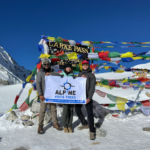
What an adventure! A few months ago, my girlfriend and I booked the Manaslu Circuit Trek with Binot and his newly founded company, Alpine Vista Treks. We had no idea it would turn out to be such an amazing experience!
The guides, Umesh and Ronis, were fantastic: friendly, knowledgeable, and always in a good mood. We were guided personally by Umesh, who truly knows the Himalayas and always made us feel safe, even when the weather was challenging, putting our safety and satisfaction first.
The trek was full of excitement: breathtaking landscapes, interesting insights into Himalayan culture, and of course, incredible Mountain View’s! Thanks to the team’s experience, well-planned acclimatization and by walking bistari bistari, we didn’t have any issues with the altitude. We successfully reached Manaslu Base Camp and crossed the Larke Pass at 5,106 meters!
If you’re looking for an unforgettable adventure in the Himalayas, with great guides, beautiful scenery, and plenty of fun , I highly recommend booking the Manaslu Circuit with Alpine Vista Treks. It’s a trip you’ll

Amazing experience doing the Manaslu circuit with Alpine Vista Trek. Our guides Umesh and Rusne were great, they knew a lot about the region and made sure we were comfortable every moment during the trek. We managed to go to the Manaslu base camp and the Larke pass thanks to the good planning. Definetely recommend this company and would do another trek with them.
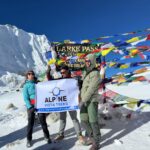
We did the tour with Rusne from Alpine Vista Trek and it was an excellent experience. Despite the bad weather conditions, the right decisions were made at every moment. The group was small, which made the experience more personal and enjoyable. Highly recommended